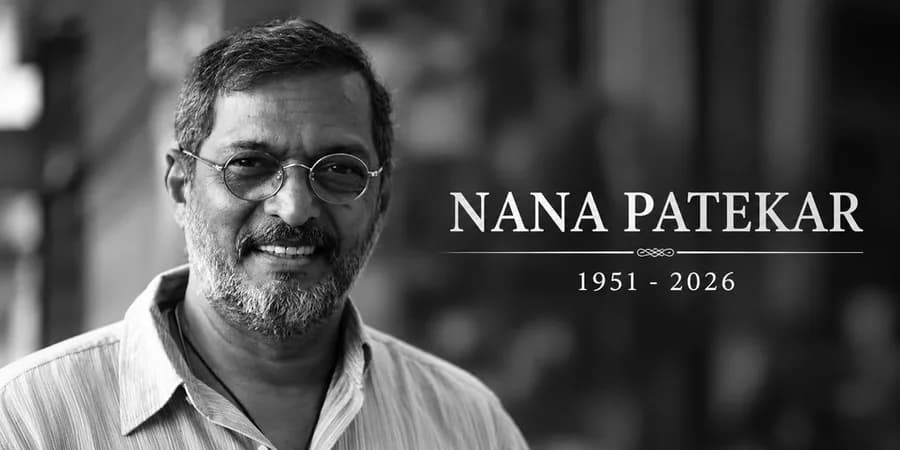
Nana Patekar: From Admiration to Reappraisal through Krantiveer and Prahaar
Nana Patekar: FROM Admiration to Reappraisal through Krantiveer and Prahaar
Shrikant Pandey, 15-Oct-2026
An Admiration Reconsidered
The sad demise of Nana Chandrasekhar Patekar on October 8, 2026, prompted me to rethink my opinion of him as an actor. Unlike conventional Bollywood stars, Patekar frequently gravitated towards gritty, morally complicated and emotionally demanding roles that would eventually earn him three National Film Awards and two Filmfare awards.
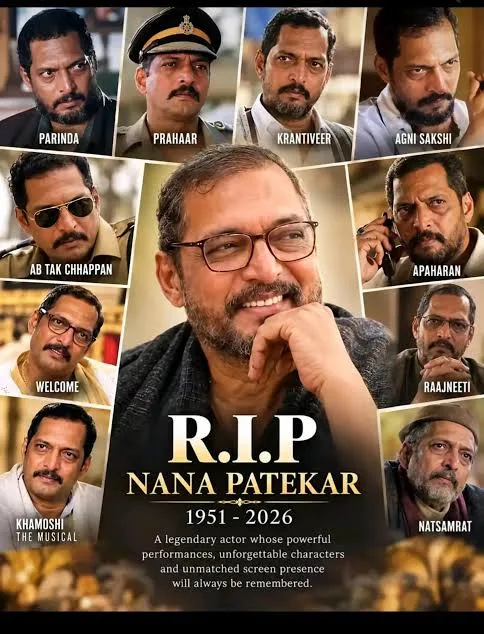
(Nana Patekar : A Man of Intensity and Emotional Honesty)
For many years, my view on Nana had been based on only a handful of his films: Gaman (1978), Aaj Ki Awaz (1984), Ankush (1986), Salaam Bombay! (1988), Parinda (1989), Khamoshi: The Musical, and Welcome. Some of these left only a small impression. In Gaman, for example, his role, though important, was very brief, while Welcome was essentially a star-studded comedy in which Nana got a chance to showcase his comic timing. Ankush and Parinda, on the other hand, showed the intensity that would later become his trademark style. From these roles, I had formed the impression that while he had great dialogue delivery, a remarkable screen presence, and a natural sense of comic timing, he perhaps worked within a somewhat limited range, primarily of an angry man, a more believable version of Amitabh Bachchan. He seemed exceptionally good in intense roles but not necessarily as versatile as some of India's greatest actors.
Looking back, that judgment, though not entirely baseless, now feels somewhat unfair as it overlooked his theatre background and the high regard in which he was held by directors, critics, and fellow actors. Reading several tributes and obituaries after his death made me realise that there was probably much more to his acting than I had appreciated.
That realisation led Manju and me to watch two of his most well-known films over the last weekend: Krantiveer (1994) on Saturday and Prahaar: The Final Attack (1991) on Sunday. The experience significantly changed my understanding of Nana Patekar's abilities.
Krantiveer: A Powerful Performance Trapped in a Mediocre Film
My reaction to Krantiveer was mixed. The film's main idea is reasonably engaging, and one can understand why it hit a chord with audiences in the mid-1990s. However, viewed today, it feels very much like a product of its time, weighed down by too much melodrama and a lack of subtlety.
The direction is often heavy-handed, the camera work uninspired, and several songs interrupt rather than help the story. Large portions of the film focus on characters played by Mamta Kulkarni and Atul Agnihotri, whose roles add little to the emotional core of the plot. The supporting characters are also uneven. The villains and politicians come across as caricatures rather than believable human beings, which takes away from the moral complexity the film occasionally tries to explore.
Danny Denzongpa brings weight and conviction to his role and, alongside Nana Patekar, is largely responsible for whatever lasting appeal the film still has. Both actors elevate material that is frequently beneath them with limited help from Paresh Rawal and Farida Jalal. On the other hand, I was struck by how underutilised Dimple Kapadia appears. An actress capable of great depth is given very little room to show it. Her emotional monologue urging Nana Patekar's character to laugh despite personal tragedy is undeniably dramatic, but it feels more like a theatrical stage play than a real moment.
The soundtrack is similarly underwhelming. Sameer as lyricist and Anand-Milind as composer disappointed. "Love Rap" (Maine Dekha Jab Teri Nazron Ke…) is the only song that, though not musically exceptional, is fun to watch; the others are simply hard to sit through. And Nana Patekar’s limited dance moves in that song are endearing, catching the viewer's attention much more than the lead actors.
If I were to rate the film today, I would probably not give it more than three stars out of five. There are simply too many moments that feel dated, exaggerated, or unintentionally funny. Yet Nana Patekar remains compelling throughout. Even when the film falters, he does not. His energy, conviction, and command over dialogue transform scenes that might otherwise have been forgettable.
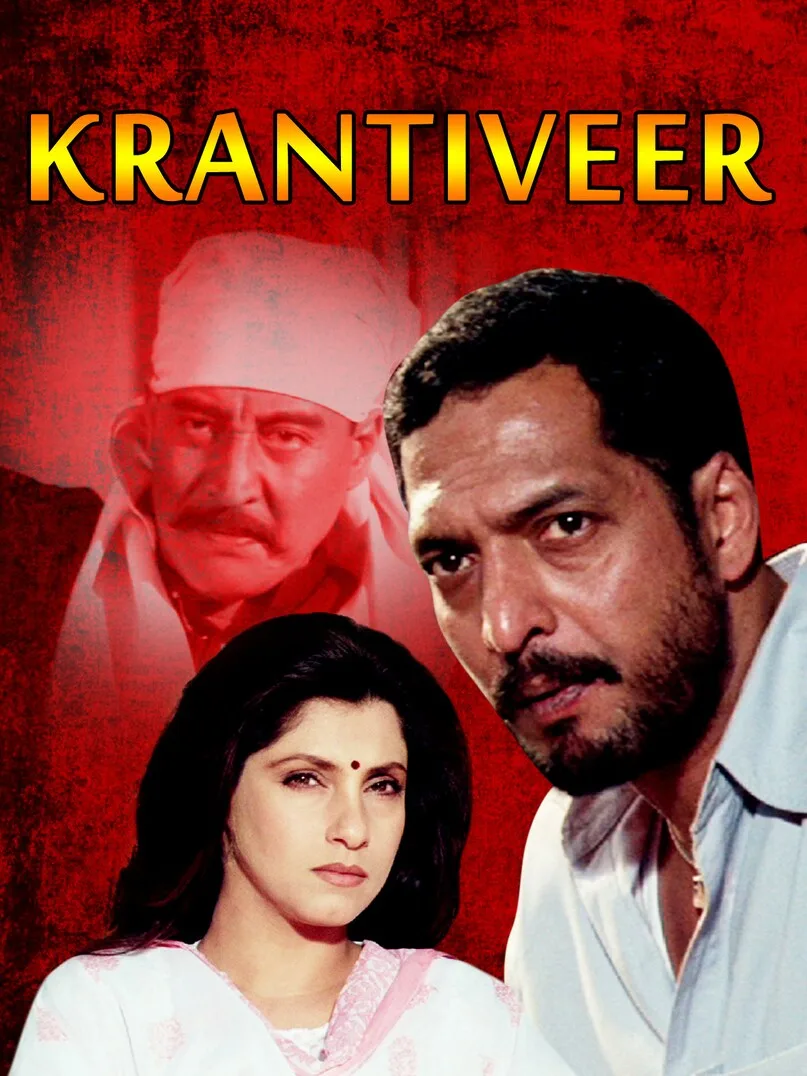
(Krantiveer – A Powerful Performance, a Flawed Film)
It is easy to see why this explosive, loud performance won the big awards of the time, earning Patekar both the Filmfare Award and the National Film Award for Best Actor in 1995. The industry celebrated the sheer magnetism of a star whose performance largely overcame the film's limitations.
Prahaar: A Film of Rare Integrity
From its opening scenes, Prahaar: The Final Attack shows a level of seriousness, authenticity, and confidence that sets it apart from the usual Hindi cinema of its time. The restrained camera work avoids spectacle and melodrama, trusting its characters, themes, and silences instead. The military training sequences are particularly impressive, presenting the physical demands of commando life with a realism that has few parallels in Hindi cinema and remains convincing even decades later.
Unlike Krantiveer, where many characters exist merely to move the plot forward, the supporting cast here feels part of a believable world. Dimple Kapadia is far better utilized and her grace, quiet dignity and restraint adds gravitas to the film. Gautam Joglekar has portrayed the character Peter D’Souza, and his admirable performance brings an essential warmth, energy as well as vulnerability. Madhuri Dixit, in the small role given as fiancée of Peter D’Souza, does a competent job but is given little room to display the immense range she would later become famous for. But it barely affects the overall impact because the film remains rigidly focused on its main themes and its remarkable realism. It is said that Patekar strictly banned the use of all makeup on set. He wanted sweat, dust, fatigue, and intense sun exposure to be completely genuine.

(Prahaar: The Final Attack – Duty, Discipline and Dedication)
What makes the technical and storytelling excellence of Prahaar even more astonishing is that it was Nana Patekar’s first time directing. Yet, despite being a landmark piece of cinema featuring a truly superlative performance from its creator, the film failed to win commercial success and any popular or major critics’ awards. That such a thoughtful and accomplished film failed to get the recognition accorded to Krantiveer remains puzzling. The contrast is particularly striking because time has been kinder to Prahaar than to Krantiveer. It also raises a broader question about whether Indian film awards have always been sufficiently attentive to artistic ambition, good directing, and deep themes.

(Prahaar – Duty, Discipline and Dedication)
Commercial success and awards apart, the film appealed to me on a very personal level. I have always held our armed forces in the highest esteem and believe that their professionalism has been one of the most important stabilizing influences in independent India. Watching Prahaar only deepened that admiration for our brave hearts.
Why Prahaar Endures
Although Nana Patekar excels in both the films, the ultimate difference lies in the directorial vision. Krantiveer relies heavily on manufactured speeches, melodrama, and cartoonish villains. Prahaar, by contrast, trusts realism and moral complexity, exploring difficult questions about civic responsibility and social decay without offering simple answers. Even the music reflects this difference. Prahaar weaves its songs naturally into the story, featuring the school prayer sequence, the engagement celebration, and Shobha Gurtu’s brilliant rendition of the Thumri ‘Yaad Piya Ki Aaye’, which stands in sharp contrast to the forced commercial songs found in other films. Mangesh Kulkarni as lyricist and Laxmikant-Pyarelal as music composer have done a decent job.
By the end of the film, I realised that my opinion of Prahaar and my new view of Nana Patekar have become inseparable. The qualities I admired in the film’s moral vision were deeply connected to the qualities he brought as both actor and director.
Prahaar – Nana Patekar at His Finest
What ultimately makes Prahaar one of the finest Hindi films I have witnessed is Nana Patekar’s performance as Major Pratap Chauhan. What impressed me most was not merely his famous intensity, but the immense emotional range he shows without ever appearing self-conscious. He is disciplined yet compassionate, controlled yet volatile, idealistic yet disillusioned.

(Major Pratap Chauhan: Leadership, Resilience and Courage)
A lesser actor might have played Major Chauhan as a one-dimensional military hardliner. Patekar instead reveals a deeply human figure, driven by duty, hurt by social indifference, and tormented by the gap between ideals and reality. In scene after scene, his eyes and face communicate a heavy emotional burden, making every moment of restraint, anguish, and outright fury feel entirely earned. Watching this performance, I understood why critics held him in such high regard.
Duty and the Loneliness of Idealism
After the film ended, I was left with a profound sense of discomfort rooted in the sharp contrast between the worldview of a soldier and ordinary civilian society. Major Chauhan lives in a world where duty is sacred, while the civilian world routinely accepts compromise, tolerates wrongdoing, and avoids confrontation.
This friction comes to a head in the disturbing scene where Major Chauhan confronts local criminals collecting protection money. He does exactly what many citizens privately wish they could do, yet when the fight escalates, the very people he is defending abandon him or turn against him. While crowd behaviour can be explained by fear, and police inaction by corruption, these explanations did not lessen my emotional response. For hours afterward, I felt embarrassed by how flexible our civilian consciences are; we admire courage in principle but hesitate when it demands personal sacrifice.
What affected me most was that the film does not present this contrast in a simple manner. Major Chauhan's uncompromising worldview is admirable, but it is also shown to be difficult, lonely, and occasionally destructive. The civilians are not shown as evil; they are shown as ordinary. Perhaps that is precisely what makes the film unsettling. It holds up a mirror not to villains, but to people like us.
The film's famous courtroom scene reinforces this discomfort. Major Chauhan laments what he sees as the loss of discipline, courage, and civic responsibility in society, going so far as to suggest that a year of compulsory military training should be required for all citizens. While such a proposal may neither be practical nor acceptable to everyone, I found myself sympathetic to the sentiment behind it. The appeal of this idea lies not in militarising society, but in building certain virtues that military training seeks to teach - discipline, accountability, physical and mental resilience, teamwork, and a greater willingness to place collective interest above personal convenience. Whether one ultimately agrees with Major Chauhan or not, his argument makes one reflect on what modern citizenship ought to mean.
The speech means even more when viewed in light of Nana Patekar's own life. As the film's director, writer, and lead actor, he was not merely expressing a dramatic idea that sounded good on screen. By all accounts, these were convictions he took seriously in his personal life as well. His long military training during the making of Prahaar appears to have left a lasting impression on him. Years later, during the Kargil conflict, he went beyond symbolic expressions of support and sought permission to serve with the armed forces. That decision does not validate every opinion spoken by Major Chauhan, but it does suggest that the film's concerns about discipline, duty, and civic responsibility came from deeply held beliefs rather than simple acting.
As we watched the film, I realised that his criticism of hypocrisy in civil society did not seem entirely misplaced. We often speak passionately about rights, but perhaps we devote far less attention to duties. We admire courage, integrity, and sacrifice in others while seldom demanding the same standards of ourselves.
Equally striking is the film's decision to treat Major Chauhan not as a triumphant hero but as a troubled and isolated figure. Rather than presenting him as a misunderstood hero waiting to be proven right, the film goes so far as to suggest that society may see him as mentally disturbed and in need of treatment—a deeply unsettling commentary on what happens to uncompromising idealists. A person who insists on integrity in a world comfortable with compromise is bound to experience frustration and alienation. In that sense, Major Chauhan's tragedy is the ultimate tragedy of every person whose expectations of society exceed what society is willing to demand of itself.
Simpler films would have rewarded him with public praise, but Prahaar chooses a more difficult path. It suggests that individuals who demand uncompromising standards of themselves and others may be misunderstood and marginalised rather than celebrated. The film therefore works not merely as a critique of civilian apathy, but as a moving look at the profound loneliness of idealism.
Behind the Scenes – Intent, Rigour and Commitment
The profound onscreen authenticity in Prahaar was not a mere act; it was forged through an extraordinary real-world commitment.
When Nana Patekar decided to co-write and direct Prahaar, his absolute priority was hyper-realism. He wanted to depict the raw, exhausting grit of military life, which led to a highly unconventional environment on set. To prepare for his lead role he did not just do a few months of casual training—he immersed himself in the Indian Army for nearly three years. He attached himself to the Maratha Light Infantry at their regimental training centre in Belagavi (Belgaum), Karnataka. Seeking absolute authenticity, he underwent a rigorous, full-scale commando training course that included weapon drills, physical endurance obstacles, tactical field training, and rope climbing. During his time there in 1990, he trained under then - Captain Vijay Kumar Singh (who later became the Chief of Army Staff and a Union Cabinet Minister). Because the movie was being shot at actual military training facilities, real officers were integrated into the production. The filmmakers needed an officer for a specific briefing scene where Major Chauhan (played by Patekar) is shown a tactical map slides for a rescue mission. Lt. Col. V.K. Singh volunteered for the cameo, appearing briefly on the screen.
This rigorous stint wasn't just for show; it profoundly impacted Nana Patekar's life beyond the silver screen. Following his dedication and completion of the training, Patekar was formally commissioned into the Indian Territorial Army as an honorary Captain in 1990. He was later promoted to the honorary rank of Lieutenant Colonel.

(Nana Patekar and General V K Singh)
General V.K. Singh frequently spoke highly of the time he spent observing Nana Patekar closely during the shoot. He noted that Patekar absolutely refused any special "star" treatment. Instead, he integrated seamlessly with the troops, matching young commando cadets step-for-step in physical training. Following Nana Patekar’s demise, General V.K. Singh took to social media, the retired General stated that Patekar was "not merely a remarkable actor, but a powerful presence," praising his immense dedication, hard work, and disciplined, "no-nonsense approach".
Kargil War – Beyond the Screen
When the Kargil War broke out in 1999, Nana Patekar initially approached senior army officials to let him join the troops, but they refused, stating only the Defence Minister could authorize it. When he personally called Defence Minister George Fernandes, he was told that it was impossible because officer commissions take at least six months, Patekar sharply replied: "Sir, a commission takes six months, but I have already spent three years training with the Maratha Light Infantry." Impressed by his background, Fernandes asked, "When do you want to go?" Patekar answered, "Today." His request was finally granted and soon after, Lieutenant General Vinayak Gopal Patankar (then Major General) received a direct call from Fernandes saying, "A friend of ours wants to come over, is it alright if he joins?"
Many military peers fondly recall that Patekar did not expect any celebrity treatment. He fully immersed himself in military life, wearing the standard combat uniform and refusing special accommodation. Patankar characterized him as "overzealous and overbearing" due to his high energy, yet deeply "kind, generous, and witty," bringing immense levity and comic relief to the stressed troops.

(With Lieutenant General Vinayak Gopal Patankar in Kargil)
Nana Patekar put his flourishing Bollywood career completely on hold and spent roughly 60 days in the highly volatile Kargil sector. He actively patrolled dangerous areas close to the Line of Control (LoC), including Dras, Kupwara, Baramulla, and Sopore. In addition to patrolling with the elite Quick Reaction Team (QRT), he actively used his time to boost troop morale and spent weeks assisting medical personnel at 92 Military Base Hospital in Srinagar, helping treat wounded soldiers coming back from the peaks. Lt. Gen. Patankar noted that Patekar spent six days assisting hospital staff, performing grueling tasks that included preparing and stitching the bodies of martyred soldiers so they could be respectfully sent back home to their families. The bond between the two extended long after the conflict ended. When Lt. Gen. Patankar was later awarded the Uttam Yuddh Seva Medal (UYSM) at the Rashtrapati Bhavan for his exemplary leadership during the war, Nana Patekar attended the formal ceremony personally to applaud and honor his former commander.

(With Lieutenant General Tej Sapru)
The grueling high-altitude conditions, intense physical exertion, and stress of the combat zone took a massive physical toll on him. Patekar revealed that he weighed 76 kg when he arrived in Srinagar, but by the time he returned two months later, he had plummeted to just 56 kg. When asked about his service, Patekar remained deeply humble, refusing to boast about it. He famously stated: "Our greatest weapon is not the Bofors, nor the AK, but our jawans”.
Following his active contributions during the war and his continued commitment as a reserve officer, his rank was subsequently elevated. He was promoted to the rank of Honorary Lieutenant Colonel in the Territorial Army. He proudly maintained this formal relationship with the armed forces for over 23 years, officially retiring from his reserve duties in 2013. His transition from Captain to Lieutenant Colonel remains a highly respected chapter in military-civilian history, proving his lifelong motto that he was a soldier first and an actor second.
Reassessing Nana Patekar
My earlier view of Nana Patekar was incomplete. What I once interpreted as a limited range was a distinctive artistic identity. He possessed a commanding screen presence that never entirely disappeared, but within that presence lived extraordinary emotional variety.
His greatness lies not in becoming unrecognisable from one role to another, but in bringing uncommon emotional truth to his characters. Prahaar proves he was capable of deep restraint, vulnerability, and moral conviction. Ultimately, if Krantiveer explains Nana Patekar's popularity as a star, Prahaar explains his stature as an artist. More importantly, it corrected a misconception I had carried for years. What I once regarded as the limitation of an actor now appears to have been the consistency of a singular artistic voice. The film compelled me not only to re-evaluate Nana Patekar, but also, in some measure, to re-evaluate myself.
For long, I have maintained a strict personal list of all-time favourites - Balraj Sahni, Nutan, Sanjeev Kumar, and Smita Patil - actors remembered for their rare authenticity. Nutan in Bandini, Seema and Sujata, Balraj Sahni in Do Bigha Zamin, Kabuliwala and Garam Hawa, Sanjeev Kumar in Aandhi, Koshish and Mausam, Smita Patil in Bhumika, Bazaar and Arth. In all these films, these actors were not merely playing characters; they conveyed an inner ethical seriousness. What struck me in Prahaar is precisely that same quality. Major Chauhan may be flawed, but he never appears false. Nana convinces us that this man truly believes every word he speaks. That authenticity is rarer than range, and perhaps that is why this performance will stay with me.

(A Possible Fifth on My List of Favourites)
So, would I add Nana Patekar to the list of my personal favourites and place him in the company of Balraj Sahni, Nutan, Sanjeev Kumar, and Smita Patil? Perhaps, but not quite yet. I still need to watch a few of his other well-regarded films, notably Angaar (1992), Tirangaa (1993), Agni Sakshi (1996) and Marathi film Natsamrat (2016) – his most critically acclaimed film, before deciding whether the list of four should finally expand to five.