In Memoriam: Jeffrey Archer (1940-2026) - A Storyteller Like No Other
In Memoriam: Jeffrey Archer (1940-2026) - A Storyteller Like No Other
A personal remembrance of thirty-five years spent turning his pages
Shrikant Pandey
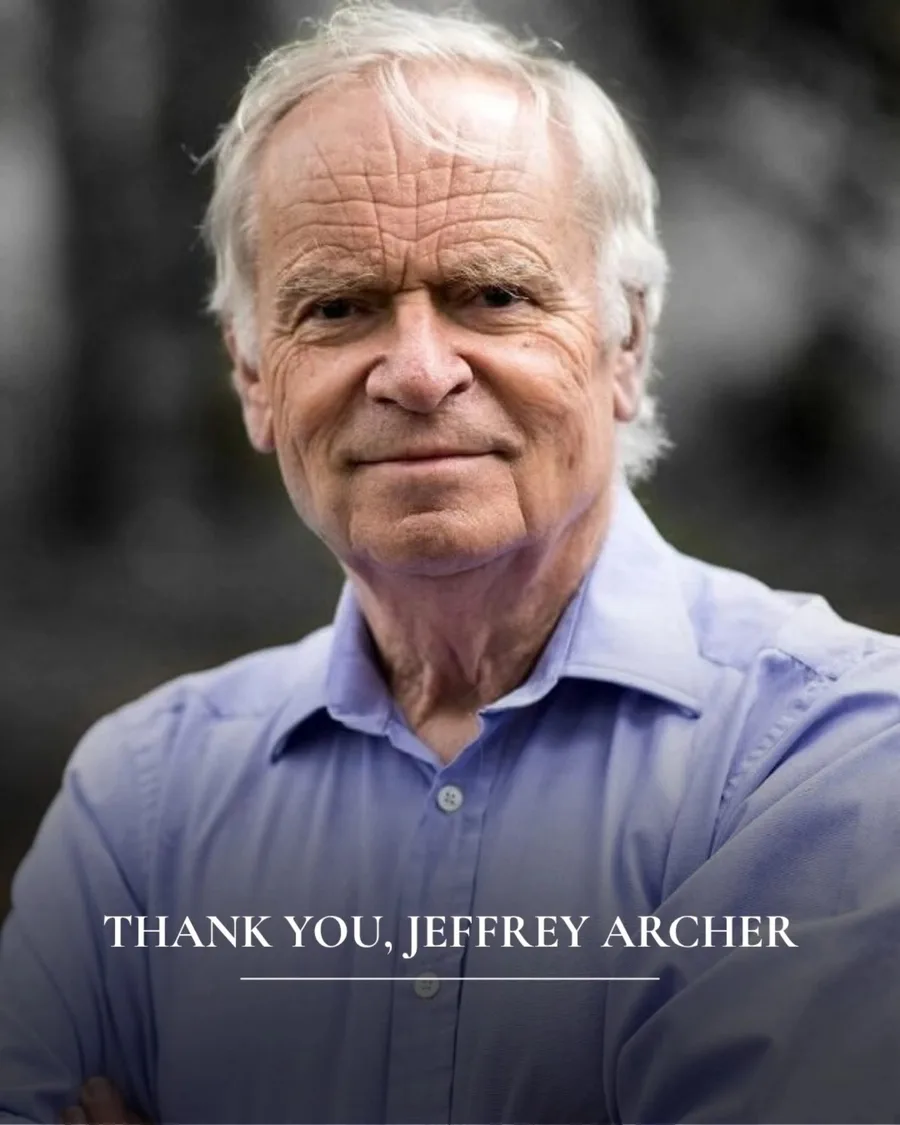
The famous English author, the irrepressible and sensationally brilliant Jeffrey Archer, has breathed his last, and his passing has saddened me beyond words. He departed peacefully at his home in Cambridge between writing sessions—a storyteller to the very end, leaving behind a staggering global legacy.

(A Master Story Teller – one of a kind and in his own league)
There was something of a classic Archer twist in the final chapter of his illustrious life, an ultimate twist in the tale. Only the previous day, at eighty-six, he had appeared before a packed audience in London, talking to readers and signing books. He died on October 5, literally between writing sessions; the following day saw the publication of Adam and Eve, the novel he had already decided would be his last. The coincidence is almost uncanny, as though circumstances themselves had conspired to devise a fitting final twist for the master storyteller.
His literary career is the stuff of publishing legend. Beginning with his debut novel, Not a Penny More, Not a Penny Less, published in 1976, he went on to build a career of unmatched commercial success. According to his publisher, Macmillan, he spent a total of 14 years and 5 months on the Sunday Times bestseller lists and 5 years and 6 months on the New York Times bestseller lists, selling over 300 million books across 119 countries in 49 languages. To this day, he remains the only author ever to have achieved the No. 1 Sunday Times bestseller spot in fiction, short stories, and non-fiction simultaneously.
My journey with him began back in 1991 with his marvellous short story collection, A Twist in the Tale, followed by the equally delectable A Quiver Full of Arrows. Fresh out of engineering college, twenty-three years old, into my first job with NTPC and posted at the relatively secluded Dadri project site, some 50 kilometres from Delhi, I had a natural appetite for thrillers. Disappointed by the likes of Sidney Sheldon, Robert Ludlum, Harold Robbins, and Stephen King, I turned instead to Arthur Hailey and Jeffrey Archer for my thrills. And that proved to be the beginning of a long love affair. I was hooked—in the exact same way I had been captivated by his compatriot Agatha Christie, or by Arthur Hailey from across the Atlantic. And, I suspect, I passed on a part of my fascination for Jeffrey Archer to our children—Charu and Joy.
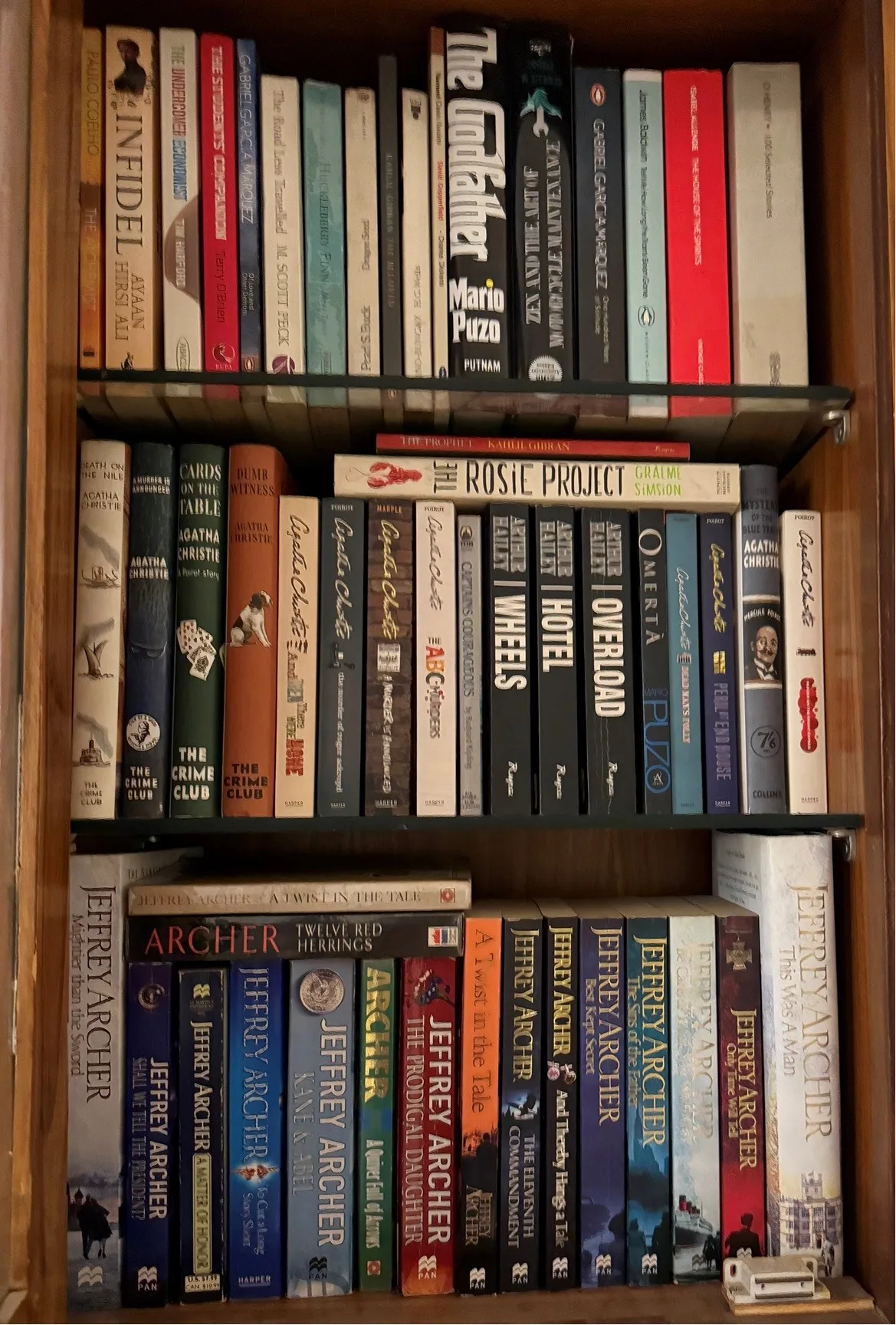
(Jeffrey Archer books occupy a place of pride in my book case)
Published in 1979, Kane and Abel, following two men born on the same day into radically different worlds, propelled Archer into a global phenomenon. I suspect it will remain his defining novel. It certainly remains my favourite Archer, though its successor, The Prodigal Daughter, is no less compelling. Indeed, many readers place the latter above Kane and Abel, and I would have no quarrel with them; I enjoyed it almost as much. But A Twist in the Tale will always occupy a special place in my heart, simply because it was my first Archer, and arguably his finest collection of short stories, though A Quiver Full of Arrows runs it remarkably close.
I have always been deeply fond of classic English writers across every era—Jane Austen, the Brontë sisters, Charles Dickens, Thomas Hardy, George Eliot, E.M. Forster, H.G. Wells, Virginia Woolf, Graham Greene, and W. Somerset Maugham, among many others. At the risk of being called light-minded, I must declare that Jeffrey Archer gave me as much joy as any of these literary greats. Today, all pretensions of being a "discerning reader" can take a rest. While the classics offer their own enduring beauty, the sheer, unadulterated entertainment that Archer provided has very few parallels—if we set aside our literary snobbery for a moment and are honest with ourselves.
The master of plot and pace who gave us Not a Penny More, Not a Penny Less, Kane and Abel, The Prodigal Daughter, First Among Equals, Shall We Tell the President?, and A Matter of Honor was in a class of his own. Once you picked up one of his books, you simply could not put it down. Archer was, in essence, a storyteller rather than a literary stylist. His prose rarely called attention to itself; it existed in the service of the story. What distinguished him was an exceptional instinct for narrative momentum, for making the reader turn just one more page and then another. He was the kind of writer who could keep you reading from 10 PM straight through to 6 AM—at least, I know he did for me.
If you love English fiction and are not yet familiar with Jeffrey Archer—though I have serious doubts about the existence of such specimens—my advice would be to get through the Kane and Abel trilogy and his three brilliant story collections: A Twist in The Tale, A Quiver Full of Arrows, and Thereby Hangs A Tale. These, in my view, are the essential Archer.
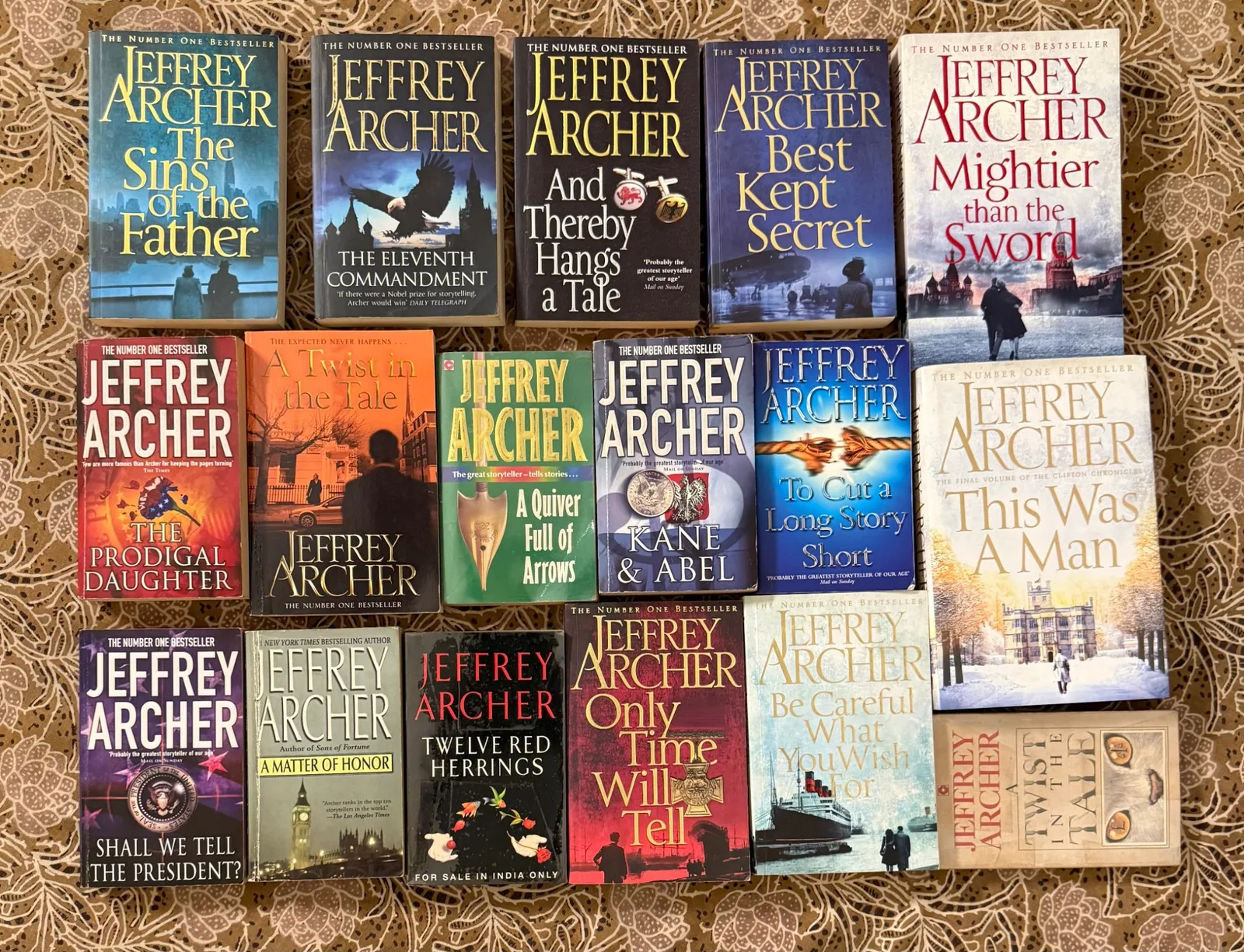
(Overwhelmed, I pulled out some of his tomes and put beside me on the couch)
A maverick in every true sense of the word, Archer was a colourful, multifaceted personality: a university athlete, a celebrated novelist, a dabbler in business, and a controversial politician who even served a prison sentence. He was hardly the quintessential Englishman with a stiff upper lip; he was larger than life.
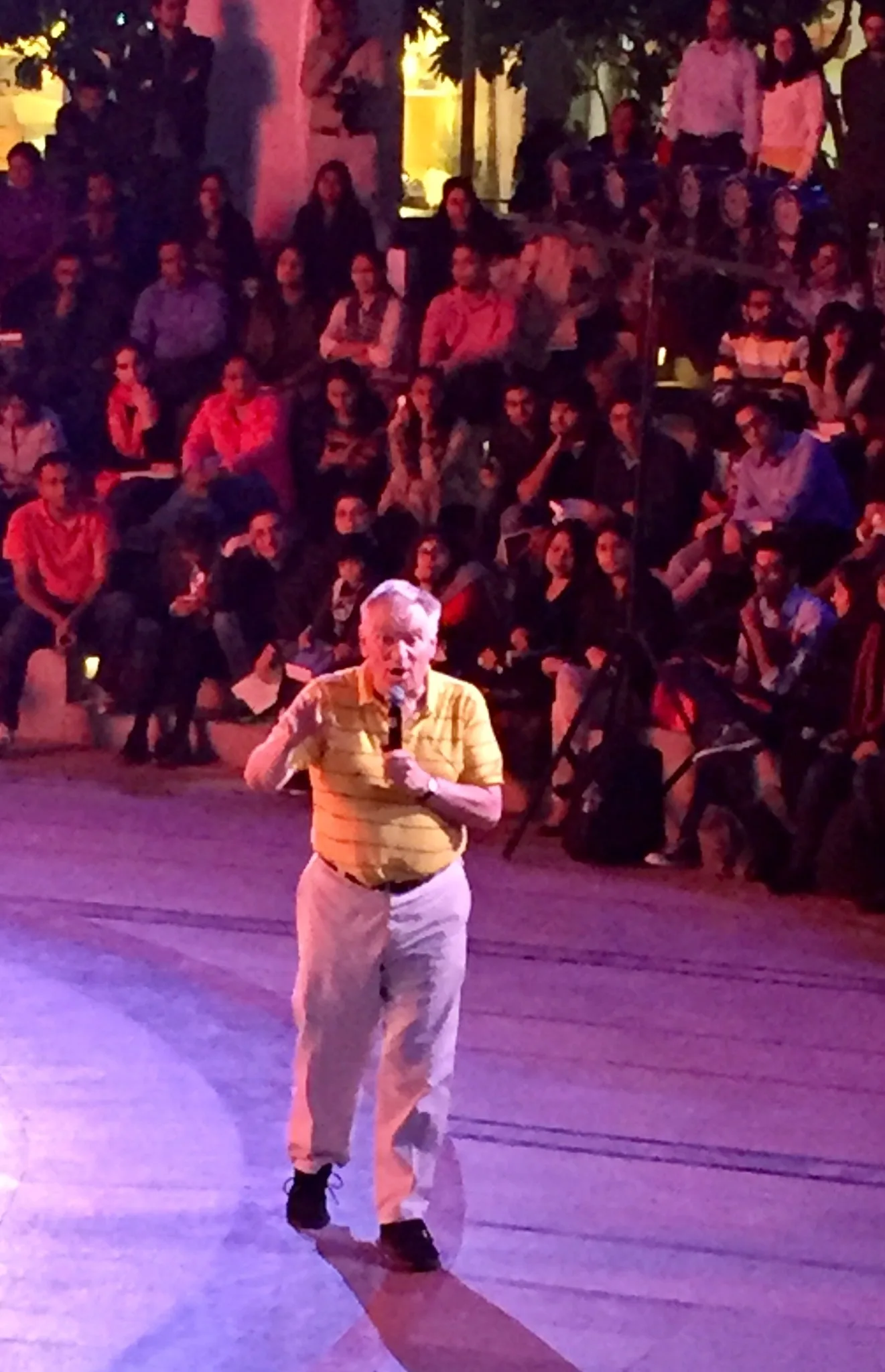
(Nov-2016, Cyber Hub, Gurgaon: a wonderful conversationalist, and a true entertainer)
He was immensely popular in India—in fact, I suspect Indians read him even more than the English or the Americans did. At the Jaipur Literature Festival in 2019, some 7,500 people reportedly came to hear him; accounts of his 2016 tour cite individual audiences numbering in the thousands. For me, that Indians loved him is not a news report but a lived experience. Back in November 2016, while promoting The Clifton Chronicles, he visited Gurgaon for a book signing at Cyber Hub, right below my office at the time. The moment I learned he was there, I left the office early, went home, asked Charu and Joy to come along, and we queued up to get autographed books. It was impossible not to be affected by the palpable excitement of the readers who had gathered there that evening to hear one of their favourite authors. But for me, it was something more than that, something very personal, even as we became part of a peculiarly Indian love affair with Archer.
Admittedly, The Clifton Chronicles did not, for me, quite match his earlier triumphs, but that is fine. With a small stretch of the imagination, I can draw a parallel nearer home. Amitabh Bachchan, another larger-than-life figure I have admired for decades, went through a prolonged lean patch after 1990, appearing in films that even some of his most ardent admirers found difficult to defend. Did that make him any less Amitabh Bachchan? Certainly not. Nor do I think Archer's later work needs to be measured relentlessly against Kane and Abel or A Twist in the Tale. Longevity inevitably brings unevenness, and perhaps we demand too much from our heroes: having once given us magic, we expect them to reproduce it forever. The Clifton Chronicles may not represent vintage Archer for me, but they take nothing away from the extraordinary body of work that preceded them.

(Our daughter Charu, queuing up to get an autographed copy from Mr. Archer, Nov-2016)
That apparently effortless storytelling, however, was anything but effortless. Archer wrote longhand, worked through numerous drafts, and followed a remarkably disciplined writing routine. His editor, Kate Elton, remembered him as "phenomenally hard-working," committed to draft after draft in pursuit of the finished book. So the compulsive readability that we readers took for granted was not merely a fortuitous gift. Archer was certainly a naturally gifted spinner of yarns, but he also worked ferociously at the craft of appearing effortless.
Archer's political trajectory was as meteoric as it was volatile. He entered the House of Commons in 1969 while still in his twenties, only to see that early promise derailed when a disastrous Canadian investment pushed him to the brink of bankruptcy. Standing down from Parliament in 1974, he turned to writing, initially as a means of rebuilding his shattered finances. Astonishing literary success brought with it a political resurrection: he later became deputy chairman of the Conservative Party and, in 1992, a life peer. Yet controversy never truly left him. In 2001, he was convicted of perjury and perverting the course of justice arising from a celebrated libel case, sentenced to four years in prison, and released early in 2003. In retrospect, the trajectory feels almost Archeresque: ambition, meteoric ascent, catastrophe, improbable recovery, another fall, and yet another reinvention. Few novelists could have invented for one of their characters a life much more eventful than the one Jeffrey Archer actually lived.
Some critics used to dismiss Jeffrey Archer as "a poor man’s Somerset Maugham." To that, I say: what an outrageous insult to both! Jeffrey Archer was Jeffrey Archer, and Somerset Maugham was Somerset Maugham. Both were one-of-a-kind, cut from entirely different cloth, and exquisite in their own inimitable ways.
For me, there is also a serendipitous thread connecting these two greats—I was introduced to both by my dearest friend, Debashish Manas Ranjan Panda—to Jeffrey Archer through A Twist in the Tale, and to Maugham through The Moon and Sixpence.
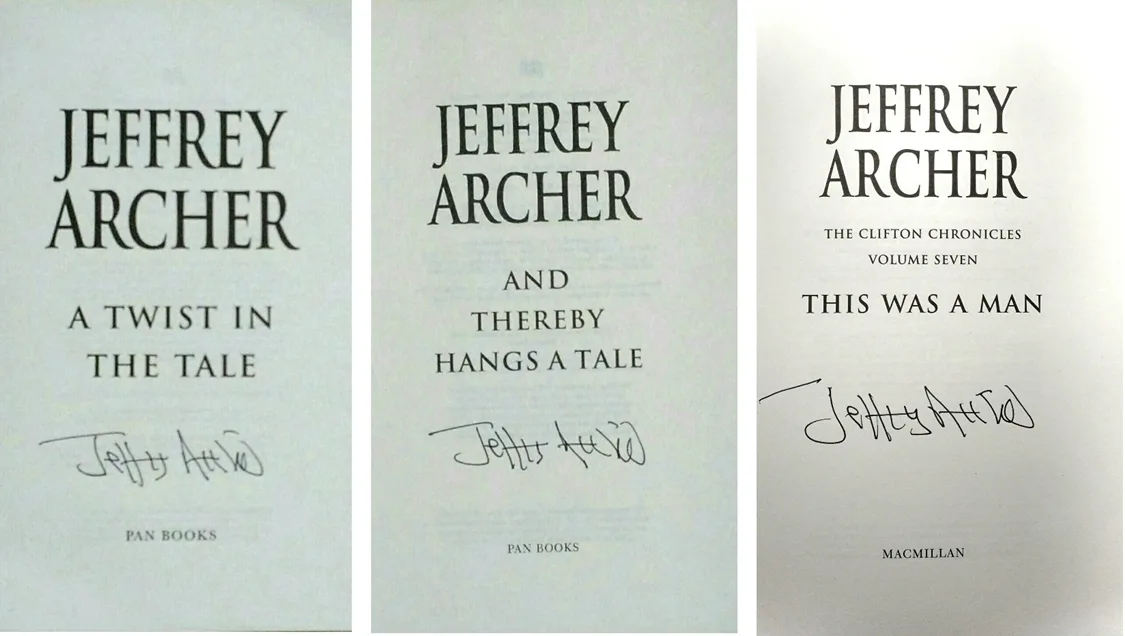
(Author autographed copies – cherished memories)
Mr. Archer, you will be sorely missed, but you will always be remembered by everyone who loves a great story—stories that keep us turning pages until dawn and always end with a twist in the tale. You have left behind a storytelling legacy that will be remembered for generations. I intend to revisit some of your finest works in the months to come, and I already know where I shall begin. I will return to A Twist in the Tale, to the book through which a twenty-three-year-old engineer at a remote project site in Dadri first discovered Jeffrey Archer thirty-five years ago. I can think of no better tribute to his exceptional mastery of the storyteller's art than to become, once again, that young reader unable to put his book down.
Jeffrey Archer, Thank You! — Rest in Peace.