Musing 5 - Loyalty and Betrayal
Loyalty and Betrayal
The Last Supper, The Death of Julius Caesar, Vibhishana and King Lear
On Loyalty, Betrayal and the Fragility of Allegiance
The Last Supper and The Death of Julius Caesar are much more than celebrated works of historical art. Each contains within it a meditation on human behaviour - ambition, power, loyalty and betrayal—that perhaps no treatise could explain as vividly.
The Last Supper takes us first into the territory of betrayal within intimacy. Judas sits at the table with those he is about to betray. What makes the betrayal painful is not merely the act itself, but the fellowship that precedes it.
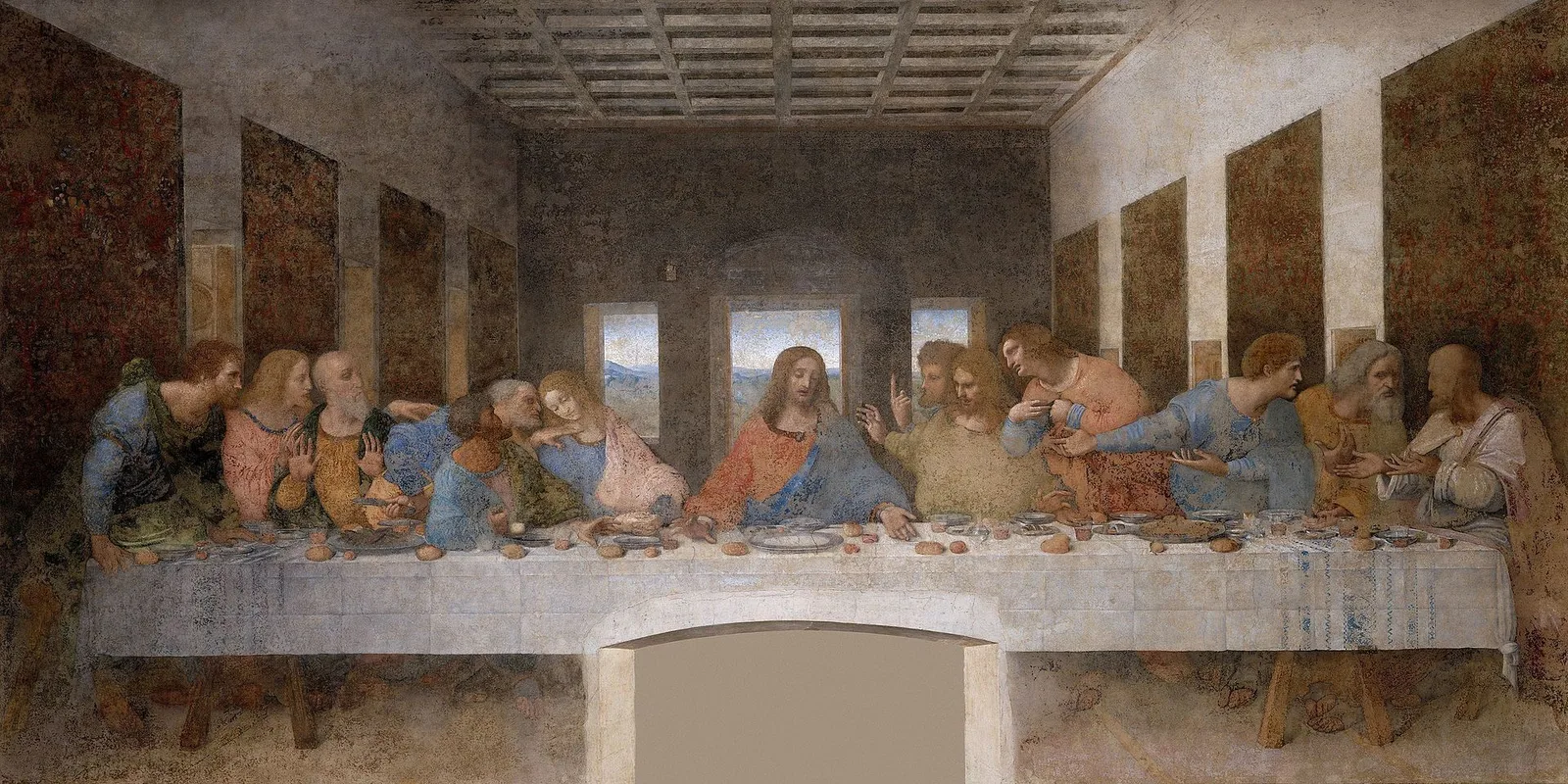
(The Last Supper, Leonardo da Vinci; 15th century mural painting housed in the refectory of Santa Maria delve Grazie, Milan, Italy, it depicts the dramatic moment when Jesus announces that one of his 12 apostles will betray him, showcasing profound human emotion and innovative linear perspective.)
The Death of Julius Caesar takes us from intimacy into power. Caesar is surrounded by men who have political, personal or ideological reasons to turn against him, including men he has trusted, like Brutus and Cassius.
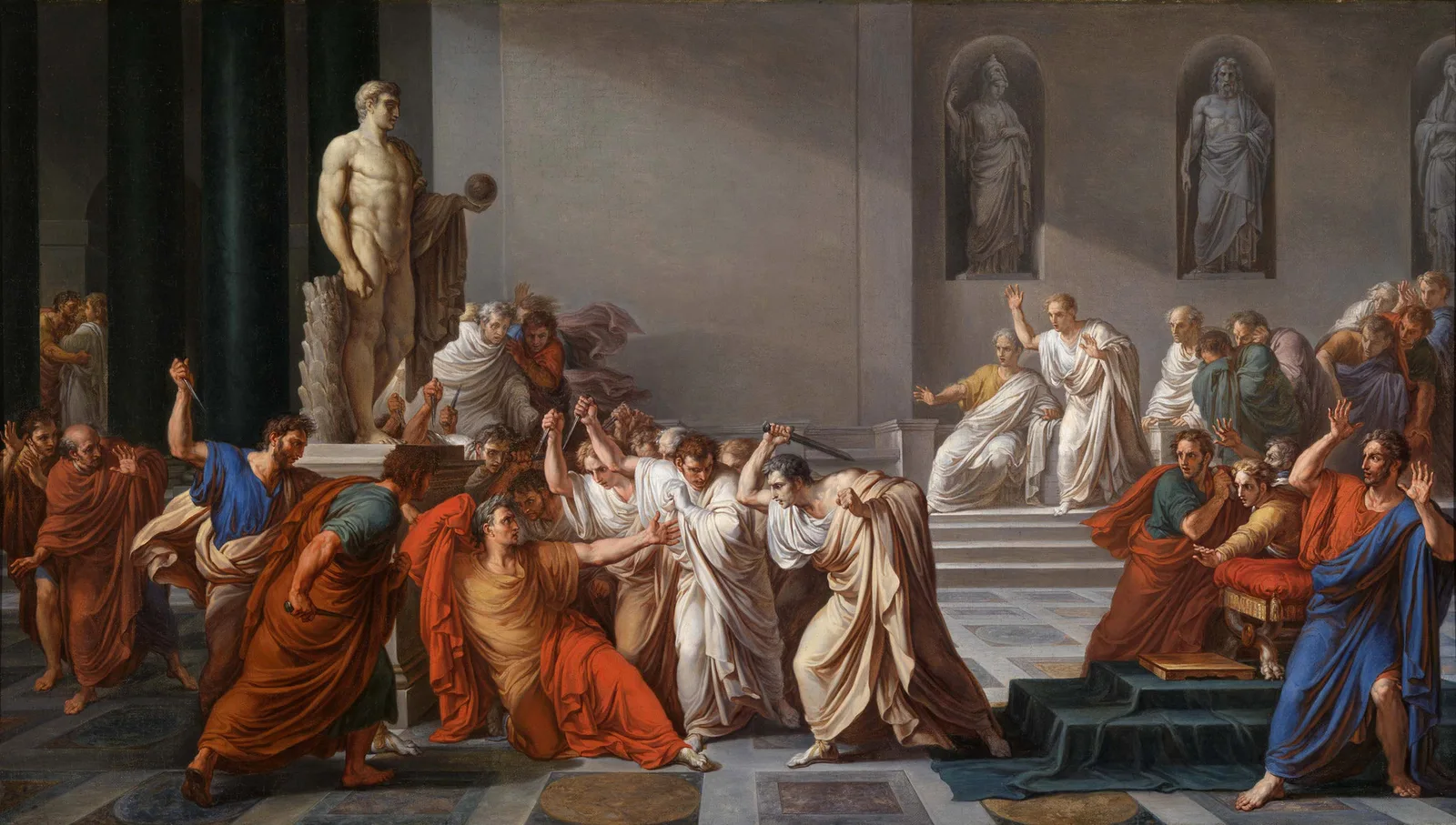
(The Death of Julius Caeser, Vincenzo Camuccini, 1806, Italy; housed in the National Museum of apodimonte, Naples, Italy. A neoclassical art, it captures the chaotic scene on the Ides of March, March 15, 44 BCE, inside the Senate, where a group of Roman senators led by figures like Brutus and Cassius turn against Caesar. The dramatic composition emphasizes the psychological horror and betrayal of the momentous event.)
Neither image tells the whole story. Both embody an ethical ambiguity that we encounter repeatedly in real life—whether in the breakdown of personal relationships or in the shifting of political allegiances. Yet betrayal rarely begins at the moment of betrayal. It usually has a history.
A few months ago, prompted by a contemporary episode in public life, I shared these two paintings on my Facebook wall. I had deliberately kept the accompanying reflection short and free of overt political reference. Revisiting it today, I found myself thinking beyond that particular episode, towards a larger and more uncomfortable question: how do human beings construct loyalty, how do they rationalise disloyalty, and how often do both sides of a broken relationship tell themselves a story in which they are the injured party?
Loyalty can arise from affection, gratitude, shared ideals, admiration, habit, identity, fear or self-interest. Loyalty can also disappear for very different reasons—humiliation, neglect, wounded pride, a sense that the original ideal has been betrayed, or simply a realisation that one’s interests no longer coincide with those of the person one followed.
Betrayal violates not simply an agreement but an expectation of belonging. Perhaps the most interesting feature of betrayal is that the betrayer seldom experiences himself as a betrayer. By the time he leaves, he has usually constructed a story in which his departure is liberation, correction or moral necessity. The person being abandoned constructs an entirely different story: After everything I did for him, this is how he repays me.
What appears sudden from the outside may have been building for years through accumulated resentment, ignored grievances, frustrated ambition or a growing sense that the relationship has ceased to be reciprocal.
Yet grievance and ambition can coexist. Human motives are rarely as pure as the stories we subsequently tell about them. Someone may be genuinely wronged and genuinely ambitious; may have legitimate grievances and still seize an opportunity for advancement; may act on principle and also benefit personally from doing so.
The story of Vibhishana in the Ramayana illustrates this moral ambiguity particularly well. He opposes Ravana’s conduct, repeatedly counsels him against abducting Sita and ultimately leaves when Ravana refuses to listen and insults him. Seen this way, his departure can be understood as adherence to a higher principle. But that is not necessarily the whole story. There is grievance in his departure, there is principle—and there is also ambition. And after Ravana’s death, Vibhishana becomes king of Lanka.
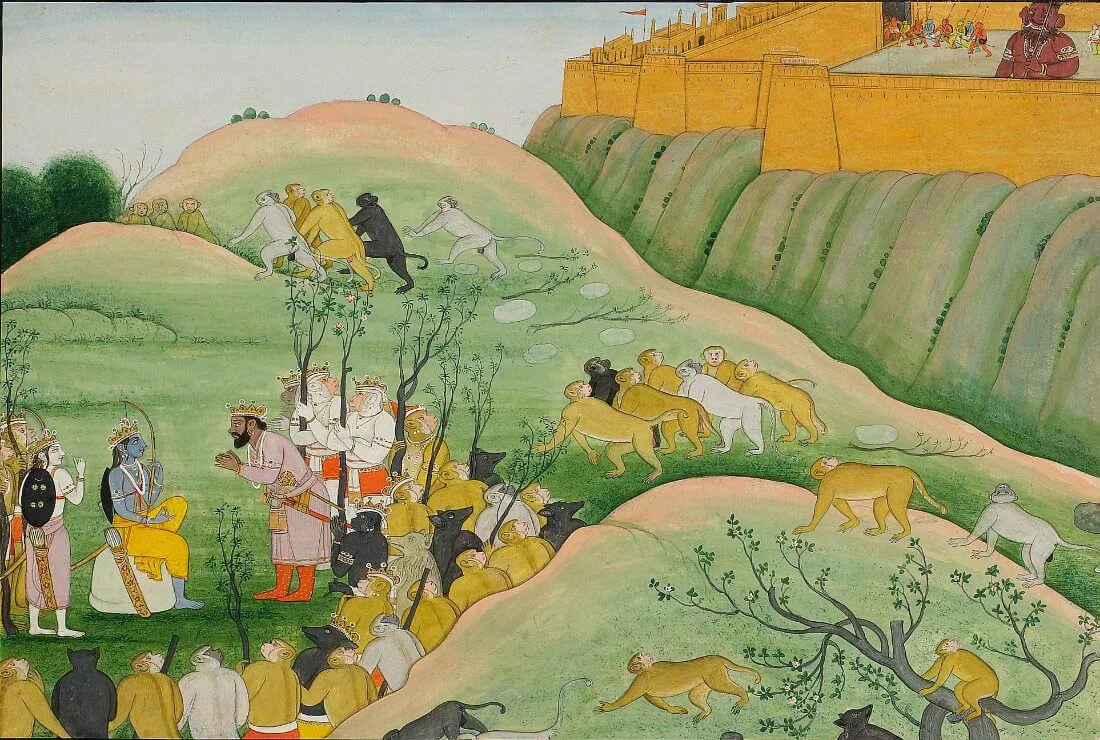
(Vibhishana bows before Rama: 18th century Indian miniature painting from Guler School)
It would be too simplistic to declare him either a righteous dissenter or an opportunistic traitor. His story reminds us that different motives can inhabit the same human act.
Brutus presents another version of the same ambiguity. Was he a republican idealist, a man manipulated by others, or someone whose personal resentment and ambition acquired the language of principle? Shakespeare leaves us with precisely the discomfort that makes the episode enduring. The question remains: when does opposition to power become courage, and when does it become opportunism?
This is why loyalty itself cannot automatically be considered a virtue. Loyalty to something unworthy can become cowardice; defection can sometimes be courage. Vibhishana and Brutus remind us that the moral character of departure depends not merely upon the act of leaving but upon what one is leaving, why one is leaving, and what one hopes to find on the other side.
Perhaps this is also why King Lear remains so revealing. Lear mistakes declarations of loyalty for loyalty itself. Cordelia’s refusal to flatter him is interpreted as disloyalty, while Goneril and Regan provide precisely the performance of devotion he wants. The flatterer can sometimes look more loyal than the truth-teller.
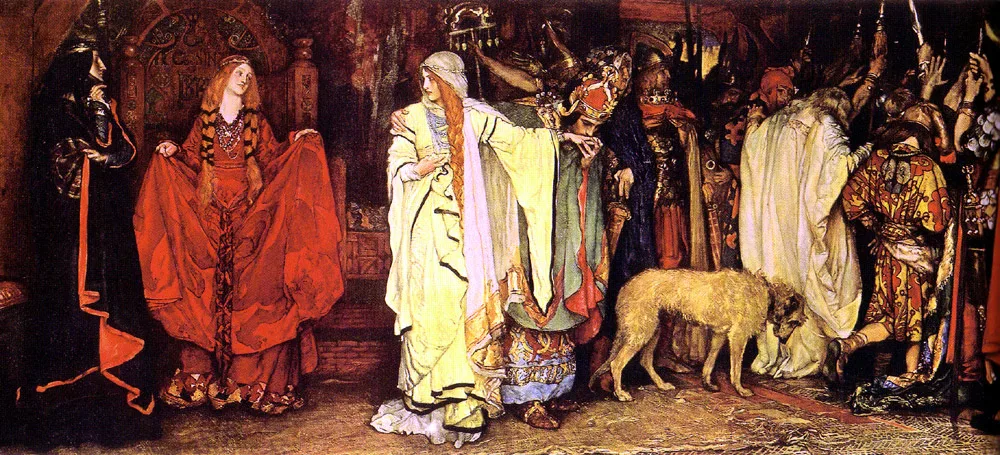
(Cordellia’s Farewell : Edwin Austin Abbey, 1898, America; housed at the Metropolitan Museum of Art, New York. "King Lear," Act I, Scene I -also known as Cordelia's Farewell. The oil-on-canvas artwork depicts the dramatic opening scene of Shakespeare's tragedy, where the heroine Cordelia stands near the center after being disowned by her father, while her deceptive sisters look on.)
Power, especially when concentrated around a single personality, is vulnerable to precisely this confusion. It may begin to value obedience over honesty and declarations over substance.
And this brings us to the distinction between allegiance and loyalty. Allegiance can be demanded. It can even be enforced. Loyalty has to be earned. Genuine loyalty requires some combination of trust, respect, reciprocity and shared purpose.
And perhaps the deepest question is not whether people betray institutions, leaders and relationships.
Do they sometimes merely stop betraying themselves?
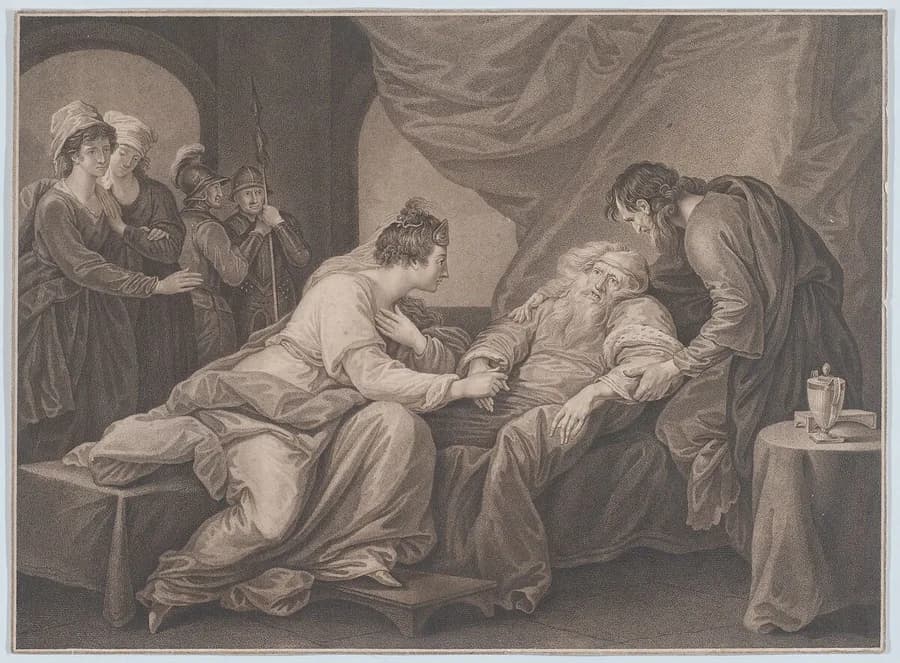
PS: The cover painting (in black and white) titled ‘King Lear and Cordelia’ , depicts Shakespeare’s, King Lear, Act 4, Scene 7. It was created by Francesco Bartolozzi (Italian, Florence 1728–1815 Lisbon). It captures the poignant moment from Shakespeare's play where a recovering King Lear is reunited with his loving daughter, Cordelia.