Musing 7 - The Soul, The Backbone, The Mind and the Curious Case of a Nonfunctional Gut
Shrikant Pandey, 5 October 2026
“The human body is an instrument for the production of art in the life of the human soul."
— Alfred North Whitehead (co-author of Principia Mathematica)
Earlier this week, on 4 October, just two days after Mahatma Gandhi's 157th birth anniversary, India appears to have had a rather remarkable day. A post on a popular microblogging platform by a rising political star announced that modern India had finally acquired three things she had apparently been doing without until then: a Soul, a Backbone, and a Mind.
This came as something of a surprise.
One wonders what India had been doing before the twentieth century. Had she been walking around for a few thousand years without a backbone? Had she been thinking without a mind? And, more seriously, had she been living without a soul?
The matter deserves some investigation.
The Search for Missing Organs - Unofficial Brilliance and Accidental Civilisation
Perhaps the Soul had been misplaced somewhere in the Upanishads. It may have been lying around there, somewhat neglected, discussing the nature of reality. The Buddha, who spent a lifetime examining suffering and consciousness, might have had some knowledge of it. Shankara certainly seemed to have encountered something resembling it. Kabir and Nanak were also heard saying things that suggested that the department of the Soul was not entirely vacant.
Consider, too, the bizarre case of the great Mauryan Emperor, King Ashoka. Long before the official twentieth-century inventory of national organs was drawn up, he managed to send emissaries across the globe, turning a local philosophy into the religion of choice for many of the world's most illustrious civilisations. It is a miracle of ancient logistics that he pulled this off while being entirely devoid of a soul, a backbone, and a mind.
Similarly, one must marvel at the sheer audacity of Swami Vivekanand, the saffron-clad monk from Bengal who stood before the Parliament of Religions in Chicago. Without the benefit of a modern, certified mind or an officially designated backbone, he delivered a universal message of tolerance, acceptance, and harmony with an unprecedented dignity and confidence that shook the Western world.
The Mind presents an even greater difficulty. Panini had been doing some rather sophisticated things with language long before modern linguists arrived. Indian mathematicians had been playing with numbers, astronomy, and infinity, fundamentally restructuring global thought by gifting the world the decimal number system and the concept of zero. Even the world’s strategic intellect was mapped out on an ancient Indian board through the invention of Chaturanga - the precursor to modern chess. It seems the global landscape of science, mathematics, and strategic logic was operating on an Indian blueprint for centuries, all while the home country was apparently waiting for a mind to be delivered.
It is truly remarkable that such profound historical moments occurred while the nation was, metaphorically speaking, still an unformed lump of clay waiting for its parts to arrive.
Perhaps, then, the Mind had been functioning unofficially.
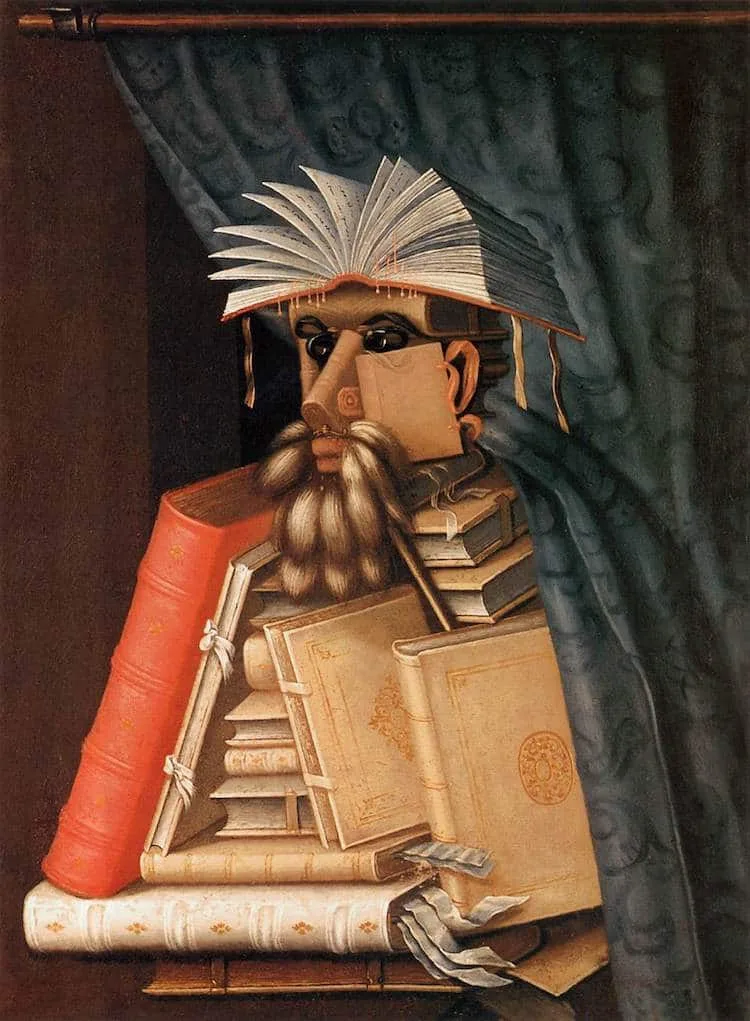
(The Librarian - Giuseppe Arcimboldo)
And the Backbone? That too seems to have been around. Farmers cultivated the land, craftsmen built things, traders travelled enormous distances, soldiers fought wars, poets wrote, monks walked across the subcontinent, and ordinary people somehow managed to keep civilisation going while kings and emperors came and went.
The Danger of Living in a Furnished House
It is possible, of course, that all these people were merely filling in until the official Soul, Backbone, and Mind arrived.
There is a more charitable explanation. Perhaps what was meant was not that India suddenly acquired these metaphorical organs, but that, during the last hundred years, certain remarkable individuals came to symbolise them. That is perfectly reasonable. Nations, like families, like to personify their virtues. It makes history easier to remember—and considerably easier to celebrate on anniversaries.
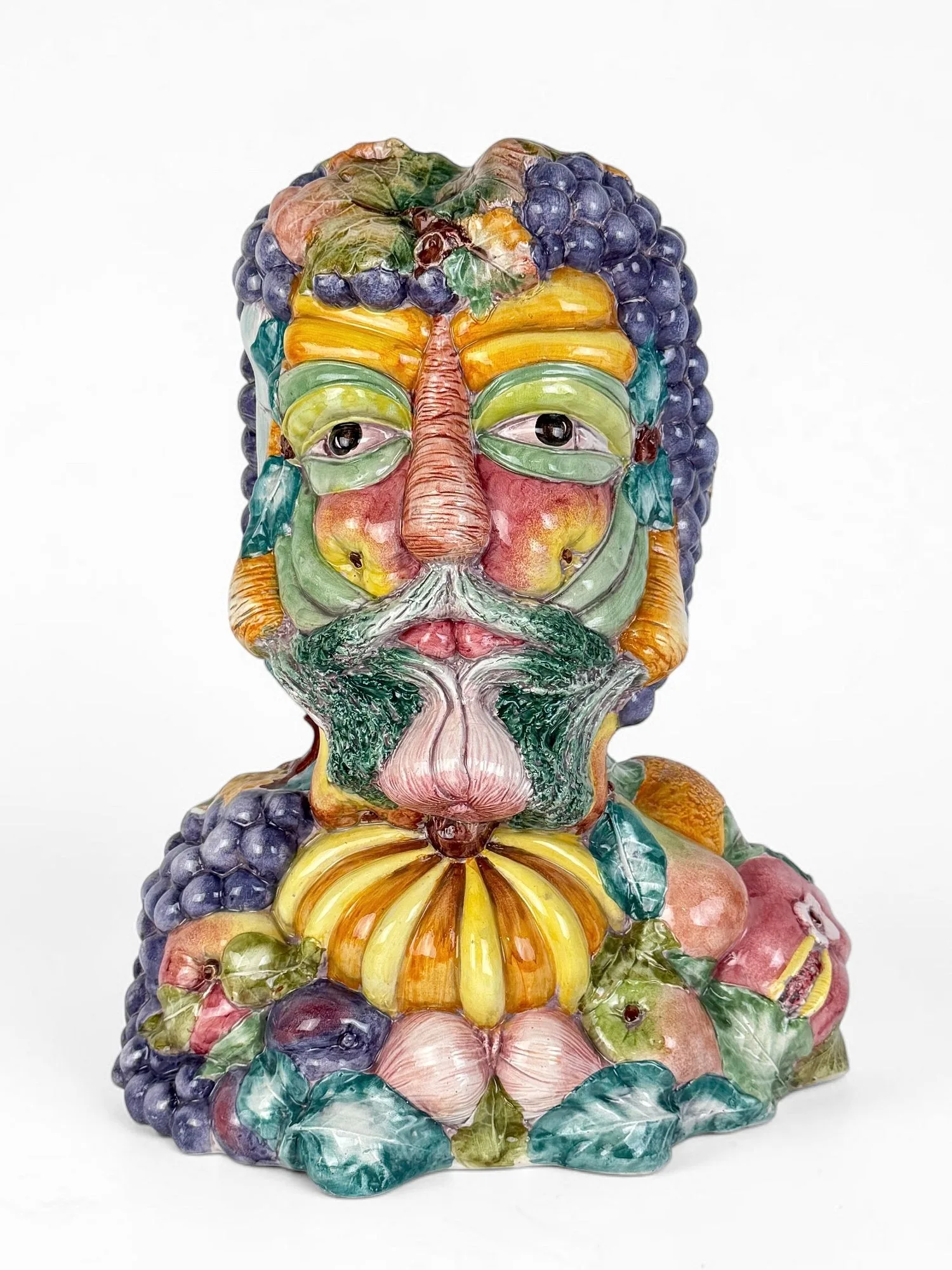
(Vertumnus - Giuseppe Arcimboldo)
But there is a small danger in the metaphor. Once we say that a particular person was India’s Soul, another was her Backbone, and a third was her Mind, we quietly transform a vast civilisation into a household that had been waiting for three missing pieces of furniture.
India was not born in the twentieth century, and neither was her consciousness.
The last hundred years certainly produced extraordinary Indians who shaped the country profoundly. But they did something more interesting than supplying India with what she had never possessed: they entered an India that already had a long memory, an old civilisation, numerous contradictions, and a mind of her own—and helped alter the direction in which that immense, unruly inheritance travelled.
An Incomplete Anatomy and Missing Sartorial Elegance
Now that these three central organs have been conclusively identified, catalogued, and given institutional name tags, the existential debate should theoretically be settled. Yet, a deep anatomical crisis remains. If the Soul, Backbone, and Mind are accounted for, we must urgently address the non-functional, unnamed Gut.
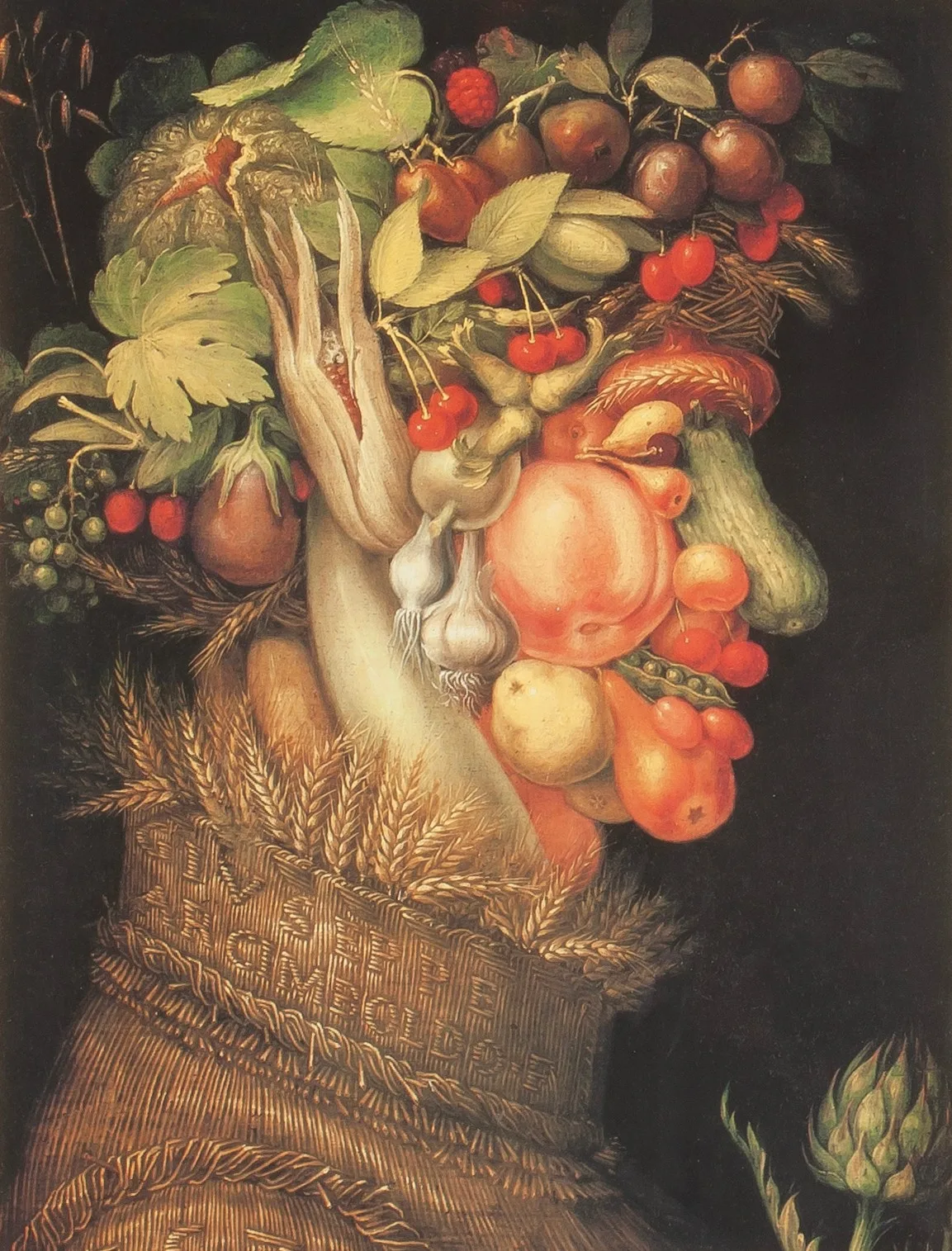
(Summer Vegetables - Giuseppe Arcimboldo)
Also, if our Western-educated upper torso is operating with high-minded sophistication, the rest of the national anatomy is a complete disaster zone. The limbs - both legs and hands - are entirely missing. Similarly, the five basic senses of sight, taste, hearing, smell, and touch have been completely left out of the grand design. Perhaps this explains our current state of national being: we are rendered utterly immobile, unable to step forward on non-existent legs, and completely free of the senses required to perceive reality as it is. Blind, deaf, and comfortably numb, we float in an abstract, highly intellectualised ether. We must find these limbs and senses quickly if we ever hope to become a complete, functioning organism rather than a collection of disembodied ideas.
The Western Stamp of Approval and Odious Patriarchy
This brings us to a fascinating sociological pattern: all our officially recognized national body parts seem to have truly discovered their indigenous identity only after acquiring higher education in England and the USA. It appears a premier Indian organ cannot truly know its own native soil until it has braved the drafts of Eton, walked the corridors of University College London (UCL), or frequented the manicured campuses of the Ivy League. We are left with the distinct impression that India's ancient cosmic consciousness required Western accreditation to become validly patriotic.
Worse still, this newly assembled national body suffers from an atrocious case of systemic gender inequality. In this grand anatomical hierarchy, the Soul, the Backbone, and the Mind are invariably personified through an entirely male lens. It is a peculiar kind of cosmic patriarchy where Mother India is parsed out, piece by piece, into a strict collection of founding fathers.
The Gutsy Ladies and the Chronic Malady
To be fair, there are indeed female candidates perfectly suited to claim ownership of the Gut. And they maintain an impeccable uniformity with the rest of the upper torso—they too had to travel to the finishing schools of Switzerland or the lecture halls of England to acquire the requisite intellectual gravitas. Yet, even with these highly polished, overseas-certified options available, the patriarchal collective psyche remains hesitant to award the title, leaving the nation's core anatomy unfinished.
The All-Important Mystery of the Gut Remains Unanswered
Which brings us back to the ultimate mystery of the Gut—that stubborn, unnamed organ that didn't get its name tag. Lacking an official title or a settled designation, the Gut acts out. It reacts to every uncomfortable idea, disagreement, or historical inconvenience by promptly throwing it up into the public space. Perhaps the Gut is not missing after all. Perhaps it is simply not digesting. Perhaps it needs to get used to clean eating and give up on oily samosas, heavy kachoris, and sugary jalebis for good. And that, one suspects, may be a rather older problem than the absence of any Soul, Backbone, or Mind.
Sartorial Elegance and Future Revelations
Maybe we will get all the missing limbs, senses, and some more on the next 2nd or 4th of October, properly informed in succinct three lines on a microblogging site. An incorrigible and incurable prisoner of hope that I am, I am eagerly looking forward to yet another monumental revelation. And if lady luck works in my favour, this much-anticipated revelation may come earlier than expected—perhaps in November or December of 2026 itself.
Meanwhile, I am equally hopeful of an illuminating revelation from the other camp - the governing one, or perhaps the mis-governing one. I am expectant, and not without reason, that we will soon receive some deep metaphorical insights into our national sartorial elegance. We are eagerly waiting to discover exactly which political luminaries represent our National Prime Attire (प्रधान परिधान) - from the ceremonial achkan and the ubiquitous structured waistcoat down to the modest brief and vest, all seamlessly dyed in a tightly coordinated palette of saffron, orange, and unmistakable ideological uniformity.
Some would vociferously protest – why has green been ignored? And that would leave me inconsolable as to why my own favourite colour, the soothing blue, never seems to catch anyone’s attention.
Perhaps I need to fend for myself and get a Blue Umbrella, with the help of very kind Ruskin Bond, to shield myself from the imminent anatomical and sartorial deluge.
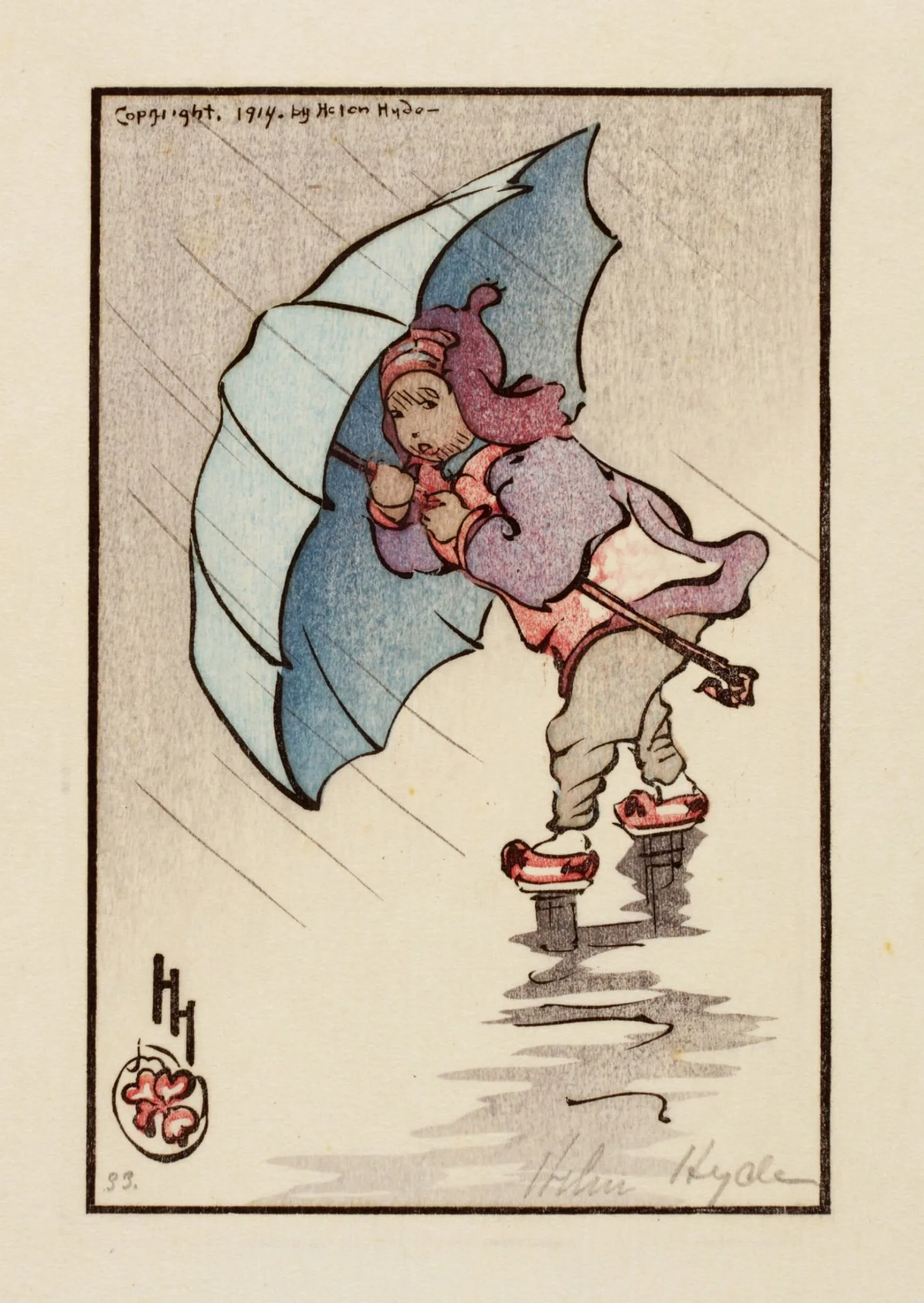
(The Blue Umbrella - Helen Hyde)