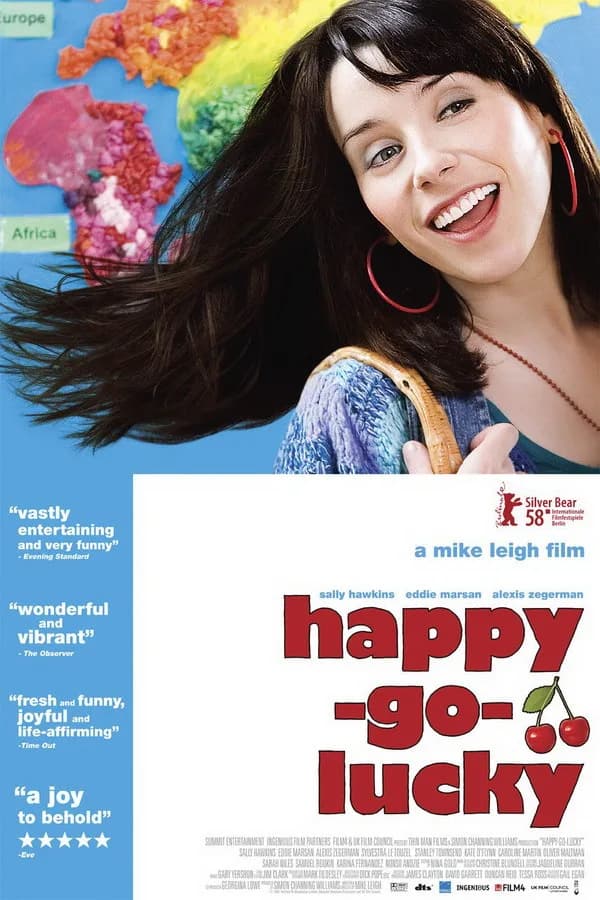
Happy Go Lucky dir. Mike Leigh
Happy Go Lucky
Watched on 8-Feb-2026, Amazon Prime
"To remain happy and try to make others happy despite trying circumstances is worth the trouble."
Had tentatively shortlisted Hrishikesh Mukherjee’s 1985 comedy “Jhoothi” for this Saturday watch but then thought of checking out its credentials and discovered that a film made in fading days of the great director, it is considered to be his least admired work, a comedy that tries too hard and lacks the breezy charm of his famed comedies aka Gol Maal, Chupke Chupke, Bawarchi and Khoobsurat. Raj Babbar as the lead protagonist of the film also tilted the favour against it; he always appears too uptight, irrespective of the demands of the character.
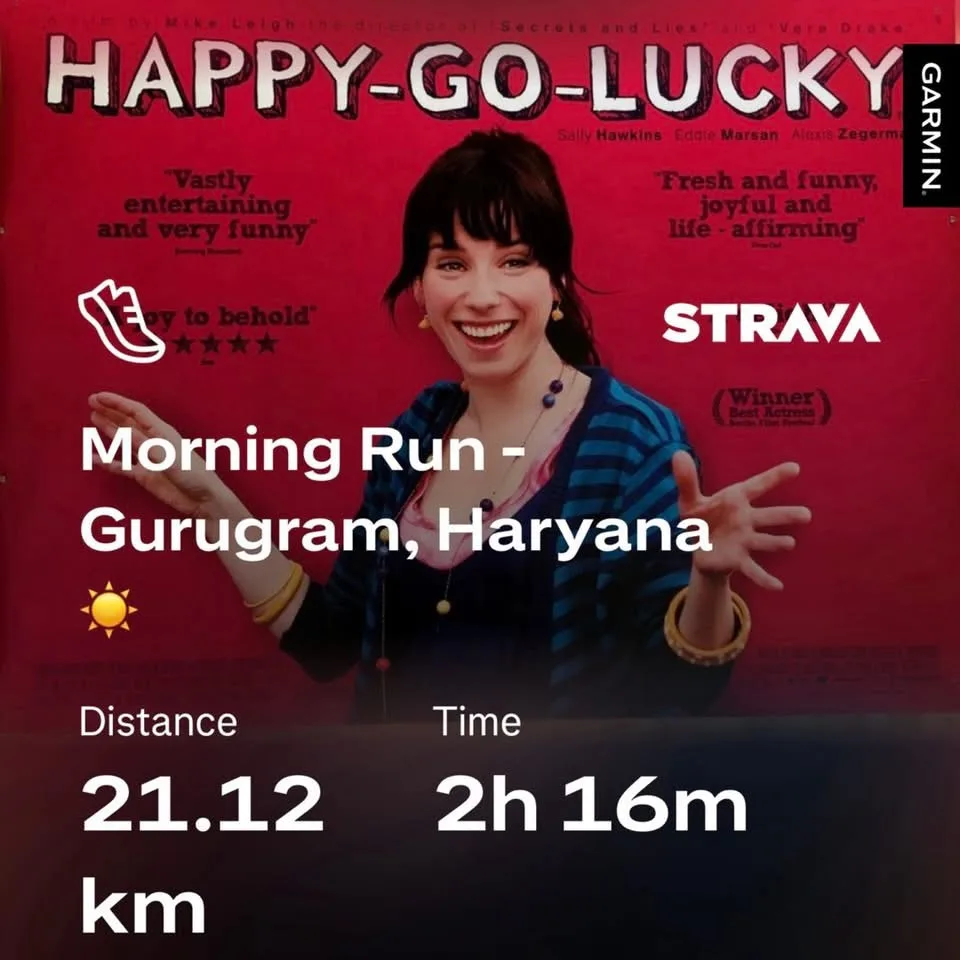
Even as I was toying with the idea of finding something better, the 2008 British Film “Happy-Go-Lucky” caught my attention on Amazon Prime and having read its effusive praise, it didn’t take any time to zero in on it. And I can’t thank myself enough for giving “Jhoothi” a miss in favor of this brilliant piece. It is directed by famous British film director Mike Leigh who has the reputation of making distraught films that can potentially make the viewer feel miserable. For a change this is very different, a feel-good film which is not exactly a comedy but has many comic moments, the kind that makes one silently chuckle rather than erupt into a laugh riot. Winner of the Silver Bear at the 2008 Berlin Film Festival, a Golden Globe for Best Actress, and a strong Academy Award contender, it is the kind of film that entertains while also making one think deeply about the ways humans deal with the external world and the way they should. It demands so much attention that the better part of my Sunday morning long run (a solo half marathon) was used in contemplation of its deep message (appearing towards the end of this very long review post).
In essence “Happy-Go-Lucky” is a character study and portrayal of one individual: the irrepressible Poppy, who is played by Sally Hawkins with exemplary intensity and immersion. This 2-hour film has a minimalist plot, in fact there is not much of a story. But it excels at character portrayal and through Poppy it presents a character that screams for attention. There are some characters that remain ever etched in the memory of viewers like Rajesh Khanna in Anand, Sanjeev Kumar in Aandhi, Nutan in Seema or Sharmila Tagore in Mausam. Sally Hawkins does the same as Poppy in “Happy-Go-Lucky” and perhaps goes beyond some of the characters mentioned above. It's a riveting portrayal that demands attention.
Thirty-year-old teacher Poppy is a single woman who always has a smile on her face and does her best to brighten the day of those around her. She takes driving lessons from tightly wound Scott, takes flamenco classes from a fiery Spaniard, encounters a tramp in the night, and sorts out a student's aggressive behavior with a social worker's help. But her open-minded, positive attitude puts her at physical and emotional risk. She has no boyfriend, is the eldest of three sisters, and has shared a flat with the same roommate for 10 years, a working woman named Zoe. The two women love each other deeply and share a kind of understanding that is rare. Poppy is indefatigably bubbly, and even an event like the theft of her bicycle does little to interrupt her optimism; it is a minor annoyance, but nothing more. Soon we see Poppy taking car driving lessons from an instructor, a bitter man of very dour personality, learning Flamenco dance, and coping with a weekend spent at the home of her pregnant sister. She is sprightly and bubbly and, at times, a bit too much. For the first 10-15 minutes of the film, in the scenes of her visit to a bookstore and then at the flat in drunken state, her boundless energy and sunny optimism is over the top and appears somewhat incongruous. However, as the film progresses, it is impossible not to be pleasantly affected by her infectious charm. Through her gurgling, burbling stream of gasps, giggles and words, dancing and jumping and laughing - she is a joy to behold.
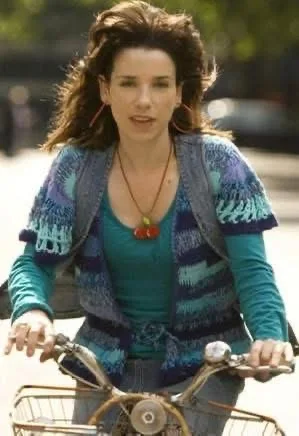
Poppy has an uneasy encounter with her second sister, married and pregnant, who reproaches her for not caring about her future. She spots a young boy at school being bullied in the playground, and calls in a social worker, though this itself is to open a glorious opportunity in her personal life. Most seriously, she finds that her driving instructor Scott (Eddie Marsan) is an angry paranoid racist, a bitter angry man, who is always on the edge of an outburst. He represents those Britons who feel unsettled by the country's rapidly changing social structure. He is simultaneously attracted to Poppy and repulsed by her. His damaged persona, perhaps shaped by his past, is constantly hankering for validation and approval. He desperately seeks both by angrily telling Poppy things like - he is a very good driving instructor and that his work ethic is beyond reproach. He also lectures her on the education system just to be spiteful to a person whose profession is teaching.
The ending of the film is intense as an emotionally charged altercation between Poppy and Scott takes place. Through such almost violent altercation, it is revealed that Scott has developed an obsession for Poppy. She handles the whole situation with courage, intelligence, tact and determination that is resolute. She lets us have a peek beneath the chaotically happy exterior and see her caring side, one with a solid value system in place. Poppy’s exterior persona, though not a mask, does hide a few things that bother her. And that is the irony, and the question: should happiness exist because of the good things happening around us, or despite the difficulties we face?
There are some very important life lessons from this delightfully light-footed and acutely meaningful film.
In the final analysis, this funny, serious, life-affirming and beautifully performed film is a must watch, if you haven’t already seen.
A dialogue that would stay with me:
Zoe: You can't make everyone happy.
Poppy: There's no harm in trying that Zoe, is there?