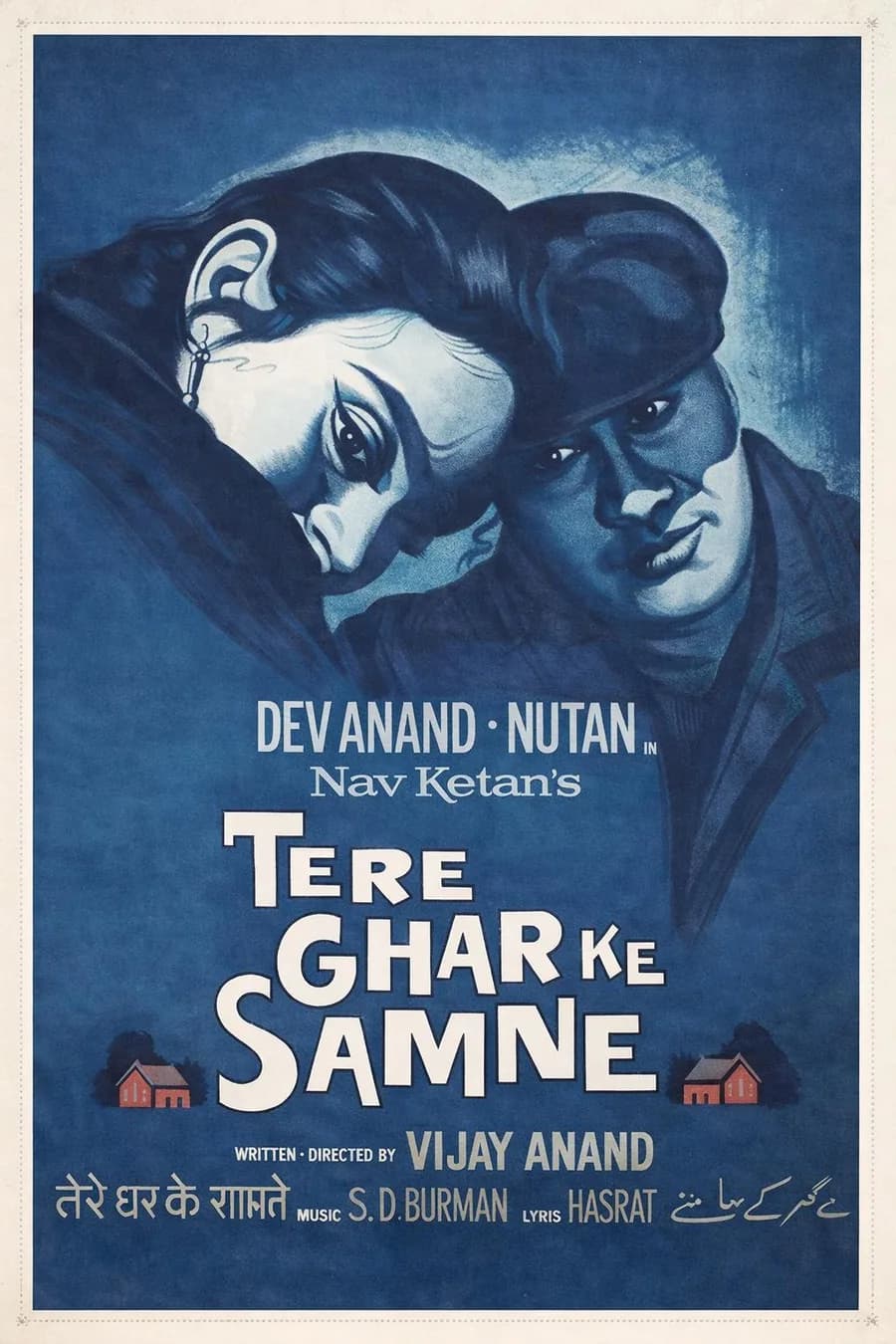
Tere Ghar Ke Saamne dir. Vijay Anand
#Saturday_Watch: “Tere Ghar Ke Saamne’
18-July-2026
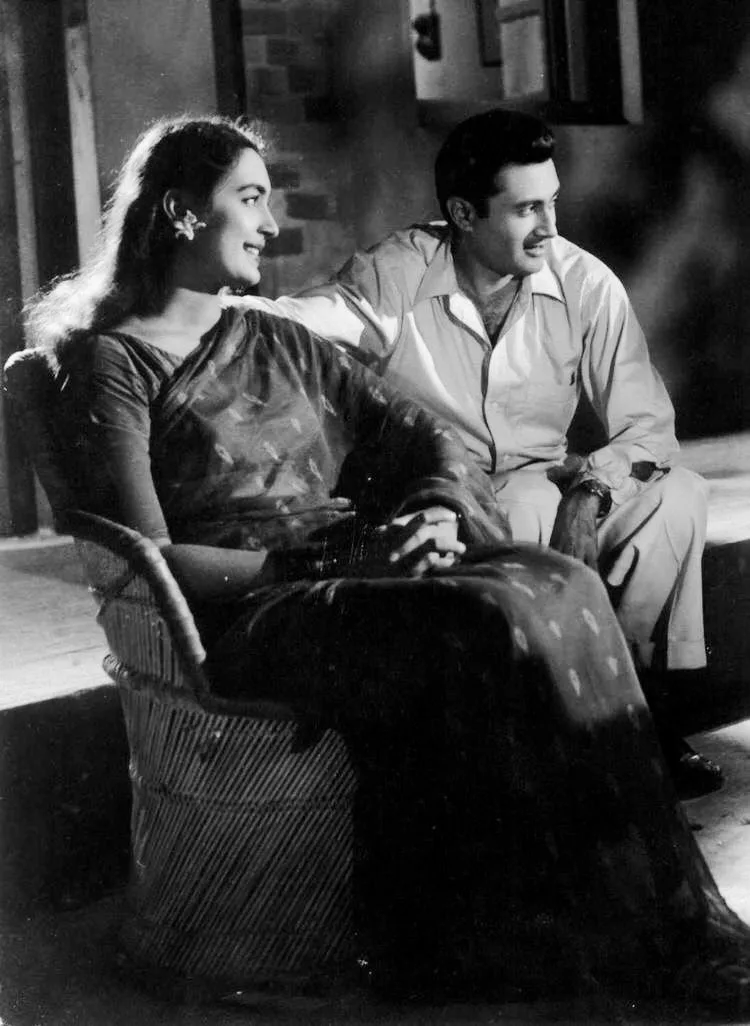
Down with a seasonal flue, smarting under irritating body aches brought on by a low grade but debilitating fever, suffering from a dull headache and burning eyes, and having slept for hours in a state of delirium, I no longer felt like sleeping or even lying on the bed. Disinclined to read and forbidden from sauntering out of the house, what does one do for the evening; a question that may bewilder even an erudite existentialist. I decided to watch an old Hindi classic, preferably a black-and-white one (easier on the eyes), provided it was light-hearted, comic without being overtly slapstick, and embellished with melodious songs. Thus, the choice naturally gravitated towards one of the light-hearted films of the evergreen hero of Indian cinema, Dev Saheb, whose movies almost invariably excel in the music department. Even then, there were quite a few contenders that fit the bill. Paying Guest, Nau Do Gyarah, and Tere Ghar Ke Saamne were the three titles that immediately came to mind. I had revisited Paying Guest only a few weeks ago, and Nau Do Gyarah, though delightful, is somewhat less accomplished than the other two, musically speaking. So, I settled on revisiting Tere Ghar Ke Saamne, the 1963 hit starring Dev Anand opposite Nutan. As Manju shares my enduring fascination for Nutan, whom I consider the most gracious and accomplished performer in the history of Hindi cinema, the choice became almost inevitable.
Tere Ghar Ke Saamne is essentially an old-fashioned, low-key romantic comedy in the mould of Romeo and Juliet, with charm in virtually every frame. The narrative is fluid, and the tautly written screenplay manages to hold one's attention throughout. Set in Delhi, the film feels intimate and familiar to anyone acquainted with the city. The capital itself becomes something of a character, with Connaught Place, Qutub Minar and the newly developing residential colonies lending the film an unmistakable sense of place. S. D. Burman’s music remains the film’s greatest asset—soulful, melodious, and effortlessly memorable.
The plot is delightfully amusing, a comedy of errors driven by coincidence. Yet it never descends into inanity, nor does it rely on the crutch of comedic sidekicks. It is sweet, understated, and witty, delivering the kind of humour that gently tickles old bones rather than assaulting the senses. Om Prakash, who plays Jagannath, affectionately known as Lalaji, and Harindranath Chattopadhyay as Seth Karamchand, are perfectly cast as two crusty old rivals. They cannot stand each other, though their enmity springs from the most trivial of causes and the two old men turn every encounter into a battle of egos, wit, and wealth. Unaware of their fathers' hostility, Jagannath's architect son Rakesh (Dev Anand) falls for Sulekha (Nutan), the spirited daughter of his father's rival. Like their fathers, Rakesh and Sulekha begin their acquaintance with exchanged glares and sharp retorts. Gradually, irritation gives way to affection, and before long they find themselves deeply in love. Matters become even more complicated when both Lalaji and Karamchand appoint Rakesh as their architect. Each insists that the house he designs for him must surpass that of the other. Amidst these comic complications, the film also offers light-hearted commentary on social conventions, presenting love as a transformative force capable of overcoming meaningless prejudices and inherited animosities.
Set against the backdrop of Delhi's burgeoning upper-middle-class neighbourhoods, the film subtly reflects Nehruvian ideals of modernisation. The eventual removal of the boundary wall separating two identical houses serves as a simple yet effective metaphor for unity triumphing over division. The playful verbal sparring between Om Prakash and Harindranath Chattopadhyay perfectly captures the flavour of the Delhi-Punjab cultural milieu. They bombard each other with a stream of comic insults such as khoosat (cantankerous old man), muchhad (one sporting an extravagant moustache), aloo bukhara, gootar-goo, and the wonderfully inventive ainakwala akhrot ("the bespectacled walnut"). The banter is silly, affectionate, and consistently entertaining.
The film also marked one of those relatively rare occasions when S. D. Burman collaborated with lyricist Hasrat Jaipuri for a Navketan production. Mohammed Rafi sang as many as five songs for Dev Anand in the film, including three solos. My personal favourite is the haunting "Tu Kahan Ye Bata", in which Rakesh (Dev Anand) wanders the streets hoping to attract Sulekha’s attention, having followed her to Shimla on his Lambretta scooter but unaware of her address. The night-time visuals of Shimla are beautifully photographed, lending the song a wistful, almost dreamlike quality. Another unforgettable number is "Dil Ka Bhanwar Kare Pukar", filmed inside the Qutub Minar. Yet another lilting melody that strikes just the right notes is "Sun Le Tu Dil Ki Sada", where Dev Anand gently conveys a message of love triumphing over hatred. The song is reprised in a poignant sad version towards the film’s conclusion. Another enduring favourite is the delightful duet ‘Dekho Rootha Na Karo’. It remains a masterclass in musical dialogue, beautifully mirroring the film’s playful romance through the alternating call-and-response vocals of Mohammed Rafi and Lata Mangeshkar.
In terms of performances, Dev Anand is his familiar self: effervescent, impossibly handsome, impeccably dressed, and radiating effortless charm through every scene. For an actress of Nutan's extraordinary caliber, the screenplay offers relatively limited scope, but she brings warmth, grace, sparkling intelligence, and emotional honesty to the role. Om Prakash and Harindranath Chattopadhyay, meanwhile, carry much of the film's comedy and do so with remarkable ease and aplomb. Rajendra Nath as Nutan’s army man brother is also part of the comic ensemble.
Tere Ghar Ke Saamne marked the final collaboration in the four-film pairing of Dev Anand and Nutan, the others being Paying Guest, Baarish, and Manzil. It was Nutan’s comeback film after the birth of her son, Mohnish Behl. Another interesting piece of trivia is that Zarine, who would later be known as Zarine Khan following her marriage to actor Sanjay Khan, played Dev Anand’s anglicised secretary. This proved to be her only screen appearance as an actress.
Watching Tere Ghar Ke Saamne after many years reaffirmed why it continues to charm audiences more than six decades later. It neither aims for grand drama nor relies on exaggerated comedy. Instead, it succeeds through wit, warmth, memorable music, and the effortless chemistry of Dev Anand and Nutan. On an evening clouded by fever and fatigue, it proved to be exactly the kind of comforting cinema one hopes to revisit—a gentle reminder that some classics never lose their healing touch.