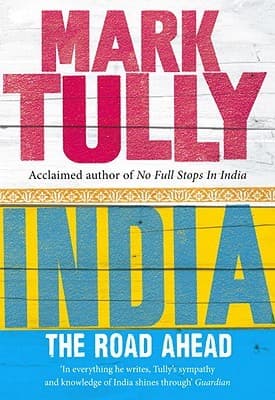
India: The Road Ahead by Mark Tully
Read - 8 April 2026 to 2 May 2026; Review - May 03, 2026; Updated - July 03, 2026
A Long Weekend, Long Slow Distance Runs and “India - The Road Ahead”
The week that is coming to an end today had an extended weekend of 3 days, Friday being a holiday for Buddh Purnima/ May Day. Monday (27-April) happened to be Mother’s 5th Anniversary (Punya Tithi), a day filled with poignant memories and overwhelming emotions. The mid week was mostly routine as normally is the case. In order to drive away the midweek blues, I took refuse in the tried and trusted activities of long slow distance running and some serious engageful reading. I logged up 45 kms in 3 days at very pedestrian pace of 6:18 minutes/ km. For reading, I finished “India - The Road Ahead”, a brilliant 300 pages, travel cum sociopolitical essay book by the venerable Indophile Late Mark Tully, who expired earlier this year. I also tried to catch up with some music but strangely enough, even my favourite melodious pieces appeared to be amplifying the noise in the mind.
Coming back to “India - The Road Ahead”, published in 2011, it did feel dated at some points but overall it remains as relevant today as it was in its year of publication. I found it to be as good as his other highly regarded work - “No Full Stops in India”. In “India - The Road Ahead”, through ten different travel essays, Mark Tully takes us through ten different issues faced by the country. These are:
1. Red India (about fate of Naxalism)
2. Caste Overturned (what Dalits in Haryana and UP feel today in light of diminishing dominance of upper castes)
3. Vote Banking (identity politics in 2009 General Elections)
4. The Ramayana Revisited (impact of airing of hugely popular mythological serials Ramayana and Mahabharata in the secular fabric of the nation as perceived by left leaning intellectuals)
5. Building Communities (role of good genuine Indian NGOs in economic/ social development in Rajasthan)
6. Farming Futures (impact of contract farming or its variations on agriculture in Punjab)
7. The English Raj (politics of language in India, role of Hindi vis a vis English and Tamil viewpoints)
8. Entrepreneurship Unleashed (awe inspiring story of the growth of Tata Group and its emergence as a global company post License Raj)
9. A Forgotten Land (neglect of the beautiful state of Arunachal Pradesh)
10. Saving the Tiger (tiger conservation success story of India)
All the essays are written based on personal interviews of the author and his partner (Gillian Wright) with real stake holders in each of the issue.
What impressed me most was Mark Tully's journalistic method. He simply describes the surroundings as seen by him and narrates the view points of those he interviewed. Each essay ends without making any sweeping judgement or without taking a moral position and it is left to the readers to form their own impressions based on the facts presented. His method is consistently sympathetic, measured and respectful. He doesn’t take sides, steers himself clear of the competing political ideologies and leaves the final inference to the readers. To sum up, Mark Tully records conversation with empathy and precision, resists the temptation to preach, and leaves the reader to draw onclusions. In an age where commentary often overshadows reportage, this committment to careful observationfeels especially valuable.
Beyond the book itself, the long drawn weekend provided me an opportunity for a quiet return to myself, through long runs and unhurried reading. A non-fiction proved to be right choice because most of the best novels do result in heightened emotions, something I was certainly not scouting for. In the solitary miles hitting the tarmac and the silent turning of the pages, the mind gradually settles and one rediscovers a gentle sense of balance and perspective.
A Long Weekend, Long Slow Distance Runs and “India - The Road Ahead”
The week that is coming to an end today had an extended weekend of 3 days, Friday being a holiday for Buddh Purnima/ May Day. Monday (27-April) happened to be Mother’s 5th Anniversary (Punya Tithi), a day filled with poignant memories and overwhelming emotions. The mid week was mostly routine as normally is the case. In order to drive away the midweek blues, I took refuse in the tried and trusted activities of long slow distance running and some serious engageful reading. I logged up 45 kms in 3 days at very pedestrian pace of 6:18 minutes/ km. For reading, I finished “India - The Road Ahead”, a brilliant 300 pages, travel cum sociopolitical essay book by the venerable Indophile Late Mark Tully, who expired earlier this year. I also tried to catch up with some music but strangely enough, even my favourite melodious pieces appeared to be amplifying the noise in the mind.
Coming back to “India - The Road Ahead”, published in 2011, it did feel dated at some points but overall it remains as relevant today as it was in its year of publication. I found it to be as good as his other highly regarded work - “No Full Stops in India”. In “India - The Road Ahead”, through ten different travel essays, Mark Tully takes us through ten different issues faced by the country. These are:
1. Red India (about fate of Naxalism)
2. Caste Overturned (what Dalits in Haryana and UP feel today in light of diminishing dominance of upper castes)
3. Vote Banking (identity politics in 2009 General Elections)
4. The Ramayana Revisited (impact of airing of hugely popular mythological serials Ramayana and Mahabharata in the secular fabric of the nation as perceived by left leaning intellectuals)
5. Building Communities (role of good genuine Indian NGOs in economic/ social development in Rajasthan)
6. Farming Futures (impact of contract farming or its variations on agriculture in Punjab)
7. The English Raj (politics of language in India, role of Hindi vis a vis English and Tamil viewpoints)
8. Entrepreneurship Unleashed (awe inspiring story of the growth of Tata Group and its emergence as a global company post License Raj)
9. A Forgotten Land (neglect of the beautiful state of Arunachal Pradesh)
10. Saving the Tiger (tiger conservation success story of India)
All the essays are written based on personal interviews of the author and his partner (Gillian Wright) with real stake holders in each of the issue.
What impressed me most was Mark Tully's journalistic method. He simply describes the surroundings as seen by him and narrates the view points of those he interviewed. Each essay ends without making any sweeping judgement or without taking a moral position and it is left to the readers to form their own impressions based on the facts presented. His method is consistently sympathetic, measured and respectful. He doesn’t take sides, steers himself clear of the competing political ideologies and leaves the final inference to the readers. To sum up, Mark Tully records conversation with empathy and precision, resists the temptation to preach, and leaves the reader to draw onclusions. In an age where commentary often overshadows reportage, this committment to careful observationfeels especially valuable.
Beyond the book itself, the long drawn weekend provided me an opportunity for a quiet return to myself, through long runs and unhurried reading. A non-fiction proved to be right choice because most of the best novels do result in heightened emotions, something I was certainly not scouting for. In the solitary miles hitting the tarmac and the silent turning of the pages, the mind gradually settles and one rediscovers a gentle sense of balance and perspective.