MUSING – 3: Three Crows and a Fence-Sitter
“I don't believe in omens, but a trio of crows recently appeared to have a message for me and delivered it rather forcefully on my head.”
Earlier this week, I was standing alone outdoors, checking my mobile phone under a tree, when I noticed three crows making an extraordinary amount of noise. They appeared highly agitated and were repeatedly pecking at the branches above me. I observed them with mild curiosity. The crows, it seems, were observing me with far greater interest.
Without warning, one of them swooped down from the left and hit me squarely on the side of the head. About three minutes later, the second crow emulated the first, delivering a more forceful strike from the right. The final lesson arrived moments later. As I started walking away, a third crow dived straight down the centre and landed an even harder blow, leaving me completely stunned. The centre one was certainly more vicious than either the left or the right.
Three hits in succession can educate even the most stubborn student. Having finally understood the message, I vacated the premises at considerable speed. Apprehensive of a chase and further blows to the back of my head, I looked over my shoulder—both literally and figuratively. I saw the three musketeers perched on the tree, still agitated but busy among themselves. The crows, I assume, considered the matter successfully resolved.
The matter might have been considered closed by the crows after they had vanquished and chased away their perceived enemy, but the three hits had left a rather deleterious effect on me. My mind became agitated - not quite as agitated as the crows but certainly shaken from its normally placid state. Consequently, I felt compelled to search for the logic behind what had seemed, at first sight, to be completely illogical behaviour.
It turns out that the crows may not have been nearly as irrational as my initial reaction suggested. Crows are remarkably intelligent and highly social birds. They live in family groups and cooperate in raising their young. During the breeding and fledgling season, they become extremely protective of their nests and recently fledged youngsters, displaying highly conspicuous defensive behaviour.
They are known to gang up on perceived threats, flying aggressively at intruders, including humans, and making loud calls to drive them away. The tree under which I was standing may well have contained a nest with eggs or chicks, or perhaps a fledgling concealed somewhere among the branches. From my perspective, I was merely standing there checking my phone. From the crows' perspective, however, a large human had positioned himself directly beneath their nursery and stubbornly refused to leave. The first swoop was probably a warning. I ignored it. Roughly three minutes later came the second strike, a just punishment for being obdurate. Then, even after I finally began to retreat, a third crow followed up with what can only be described as a farewell message: that stiff-necked, recalcitrant individuals are not welcome in their territory. Thus, on reflection, the crows were probably far less interested in assaulting me than in evicting me. Their message was essentially, "Please get away from here," rather than "I wish to harm this human."
Of course, there remains the possibility that I simply looked particularly suspicious that afternoon. I had not been in an especially cheerful mood and may not have presented the most reassuring appearance.
Furthermore, there exists a vast and contradictory folklore surrounding crows. Historically, different societies have looked at the exact same bird and seen entirely opposite things - rendering them simultaneously auspicious and ominous depending on the cultural lens through which they are viewed.
So, if I now go around announcing that “a crow swooped down and struck me on the head three times,” I am likely to receive a remarkable variety of interpretations. Some will be ominous. Some will be reassuring. And some will simply conclude that the crow had a nest nearby. The last explanation is perhaps a little uncharitable to my appearance. The remaining hair on my head may be of an indeterminate colour, generously described as “salt and pepper”, but it bears only the faintest resemblance to a nest.
In Hinduism, feeding crows during pind daan and shradh rituals symbolizes feeding departed ancestors. Crows are viewed as messengers between the living and the spirit world, or as forms assumed by ancestors to accept food offerings. If a crow eats the offering, it is taken as a sign that the soul is at peace. Scripture and tradition describe crows as a link to Pitru Lok, the realm of the ancestors.
I remain sceptical of most rituals, including this one. Yet, such is the crow's special place in Hindu tradition that one is tempted to look for a deeper meaning in the encounter.
Perhaps some unknown agency selected those three black-feathered emissaries to impress upon me that I ought to take such traditions a little more seriously than I do. After all, I occupy a rather comfortable middle ground: not a convinced atheist, not a particularly practising Sanatani, and not even a dyed-in-the-wool agnostic.
Seen in this light, the geographical distribution of the airborne assault makes a great deal of sense. The ideological Left and Right will occasionally tolerate a stationary observer, but it is often the zealous Centrist who is least at ease with a fence-sitter.
However, I have no immediate plans for ideological reform—not to the Left, not to the Right, and not even to the Centre. I have spent many years in this indeterminate ideological space and have grown rather fond of the view from the middle. If Providence wished to convey a message, it may have succeeded in moving me away from a tree, but it has not yet persuaded me to abandon the fence.
Three blows from three crows may be enough to change one's location; they are not enough to change one's metaphysics.
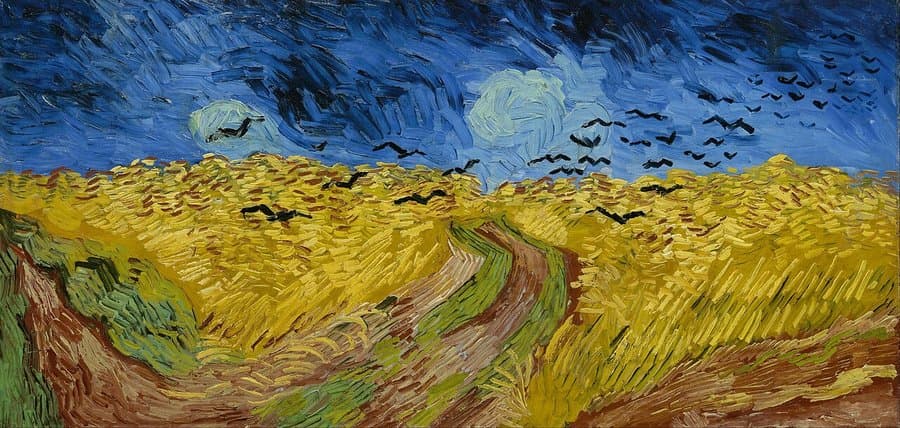
Painting: Three Crows against the Rising Sun (1812 - 1814) by the Japanese artist Totoya Hokkei.