Mora Gora Ang Lai Le
Ego Clash of Two Titans, Birth of a Legend and a Metaphor Explained
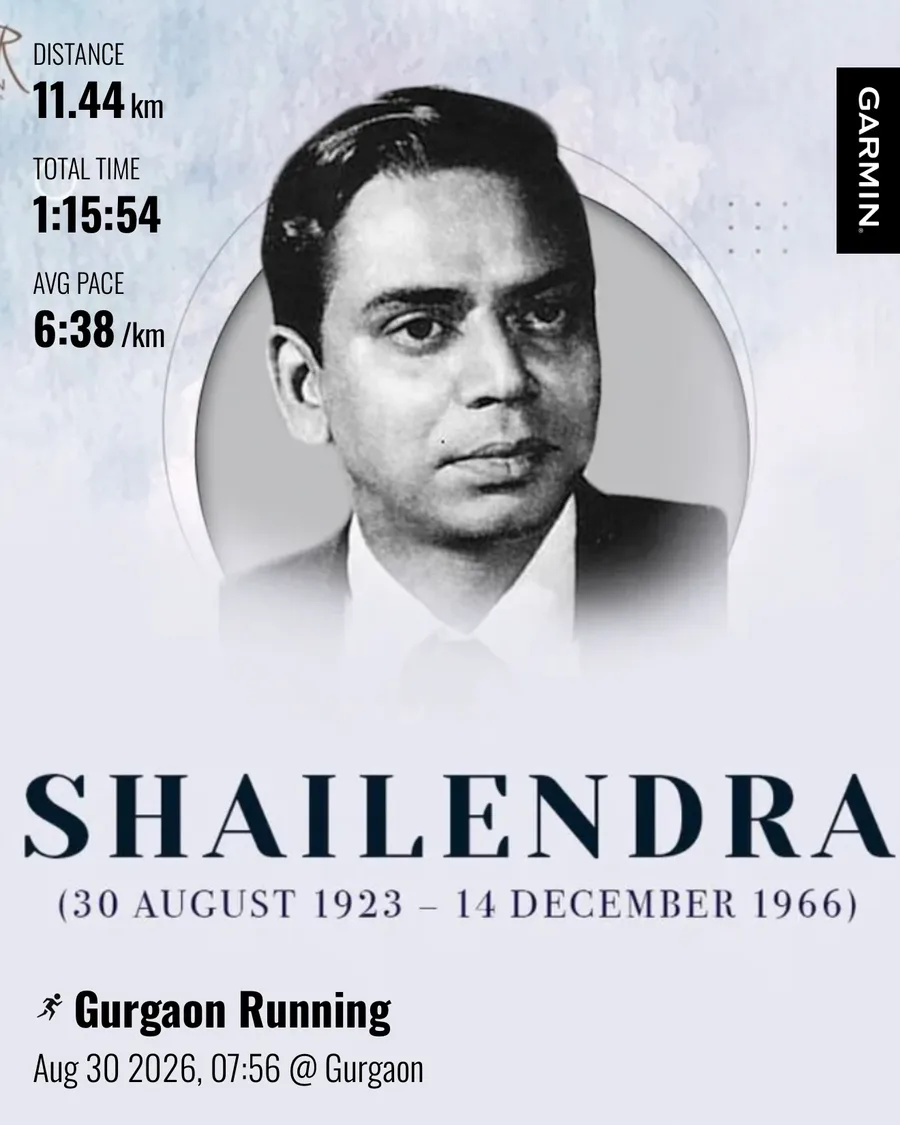
Today (18-August-2026) marks the 92nd birthday of Gulzar saheb, a colossal figure in Indian cinema and its literary landscape. On his birthday, one celebrates not merely a lyricist but a poet who transformed everyday language into luminous art. From the gentlest nuances of love to the deepest reflections on time and human relationships, his words carry elegance and emotional depth that few could equal. In the grand tradition of Shailendra, his mentor, he stands apart for a uniquely evocative imagination. The day has brought back a fascinating story about how he entered the world of film lyrics, one that I remember having read a few years ago.
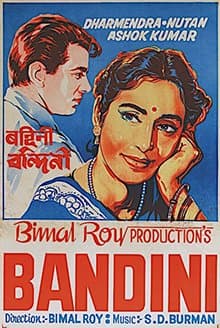
"Mora Gora Ang Lai Le" from Bandini (1963) is universally celebrated as Gulzar’s official debut, though the distinction of the first released film featuring him as a lyricist goes to Prem Patra (1962). In the Indian film industry, a movie's release date does not always reflect when its music was created. During production of Bandini, a massive argument broke out between the film's lyricist, Shailendra, and the music composer, S.D. Burman. Shailendra walked out of the project. Needing a song urgently for a specific situation, Bimal Roy took a chance on his young assistant, Sampooran Singh Kalra (Gulzar). Gulzar initially refused, stating he did not want to become a commercial film lyricist and insisting that poetry was only a hobby. However, S.D. Burman stepped in and convinced him. Gulzar finally penned the iconic, metaphor-heavy track. By the time the song was finalized and recorded, Shailendra and S.D. Burman had patched up their differences but "Mora Gora Ang Lai Le", a legendary contribution to the album, was retained. The rest of the songs were written by Shailendra and include brilliant pieces like ‘O Janewale Ho Sake To Laut Ke Aana’ sung by Mukesh and ‘Tere Sajan Hain Us Paar - O Mere Majhi’ sung by S.D. Burman.
Mora Gora Ang Lai Le was therefore the first lyric Gulzar ever penned for cinema. But there is a twist in the tale. Impressed by Gulzar's work on the Bandini track, Bimal Roy immediately recommended him to composer Salil Chowdhury for another ongoing project, Prem Patra. Gulzar wrote "Sawan Ki Raaton Mein" for it, a beautiful duet sung by Lata Mangeshkar and Talat Mahmood. Although Bandini started production first, its release faced significant delays, and it finally came out in 1963. Meanwhile, Prem Patra finished quickly and hit theatres earlier, in January 1962. Prem Patra was a commercial failure, and his singular song in it went largely unnoticed by the public at the time. Like Bandini, Prem Patra too fetured a primary lyricist, Rajinder Kishan.
"Mora Gora Ang Lai Le" is a masterclass in metaphor. In the film, the heroine, Kalyani (played by Nutan), sings this while walking through the night to secretly meet her lover. To make her romantic yearning acceptable in a socially conservative backdrop, Gulzar frames her mortal love using the divine, mythical love story of Radha and Krishna.
"Mora gora ang lai le, mohe shyam rang dai de"
(Take away my fair complexion, give me a dark complexion)
The metaphor is beautifully grounded in the immediate situation: her fair complexion may betray her in the darkness, exposing her secret rendezvous. She therefore wishes to exchange her fair skin for Shyam’s dark colour. But the metaphor goes beyond concealment: by taking on his colour, she seems to surrender her separate identity to the beloved, suggesting both physical and spiritual union.
"Chhup jaungi raat hi mein, mohe pee ka sang dai de"
(I will hide in the night, grant me the company of my beloved)
This draws heavily from classic Indian art and poetry depicting the Abhisarika Nayika - a heroine who braves dangerous paths and storms in the dead of night to meet her lover. Classical Thumris frequently depict Radha slipping away in a dark blue saree to blend into the night. By clothing herself in darkness, she masks her worldly identity. The physical darkness of the night represents a haven where social judgments disappear.
"Badli hata ke chanda, chupke se jhaanke chanda / Tohe Raahu laage bairi, muskaaye ji jalaai ke"
(The moon peeks from behind the clouds and smiles mockingly; may Rahu eclipse you, oh enemy!)
Here, instead of treating the moon as a romantic ally (as most Bollywood songs do), the heroine views the moon as a spy or an enemy because its bright light threatens to expose her. She angrily curses the moon, wishing that the demon Rahu would eclipse it so she can remain wrapped in darkness.
"Ek laaj roke paiyaan, ek moh kheenche baiyaan / Jaoun kidhar na jaanoun..."
(Modesty chains my feet, but attachment pulls my arms; I know not where to go...)
This perfectly mirrors the conflict of the Gopis (cowherd girls) of Vrindavan, torn between Samaj-laaj (societal honor, duty to family) and their irresistible, magnetic pull (Moh) toward Krishna. Kalyani’s feet are frozen by the fear of social shame, while her heart is pulled forward by love. In that tension, her romantic longing acquires the dimensions of devotional surrender.
For this song, S. D. Burman didn't just compose a melody; he built an atmospheric, outdoor soundscape that made the listener feel the vast, quiet expanse of a rural Indian night. To anchor the song in a real-world, outdoor setting, he heavily incorporated the organic chirping sound of crickets into the background score. The effect is immediate: the heroine seems completely alone under an open sky in a quiet village. The song purposely avoids heavy percussion such as tabla or dholak. Instead, a gentle, swaying rhythmic pattern is used that mimics the slow, cautious pacing of a person walking in the dark. Burman stripped away grand orchestral strings and relied primarily on a few acoustic instruments. The flute evokes the gentle whistle of a night breeze while subtly recalling Krishna's divine flute. The arrangement recedes around Lata Mangeshkar’s core lines, allowing her voice to convey the intimate vulnerability of a woman navigating a dark path to meet her lover.
Gulzar’s first major lyric was about a woman wishing to disappear into darkness, while his own words were about to emerge into the light. The song was about hiding, but it announced a writer who would spend the next six decades making words impossible to overlook.